
Turn Dormant Contacts Into Active Buyers

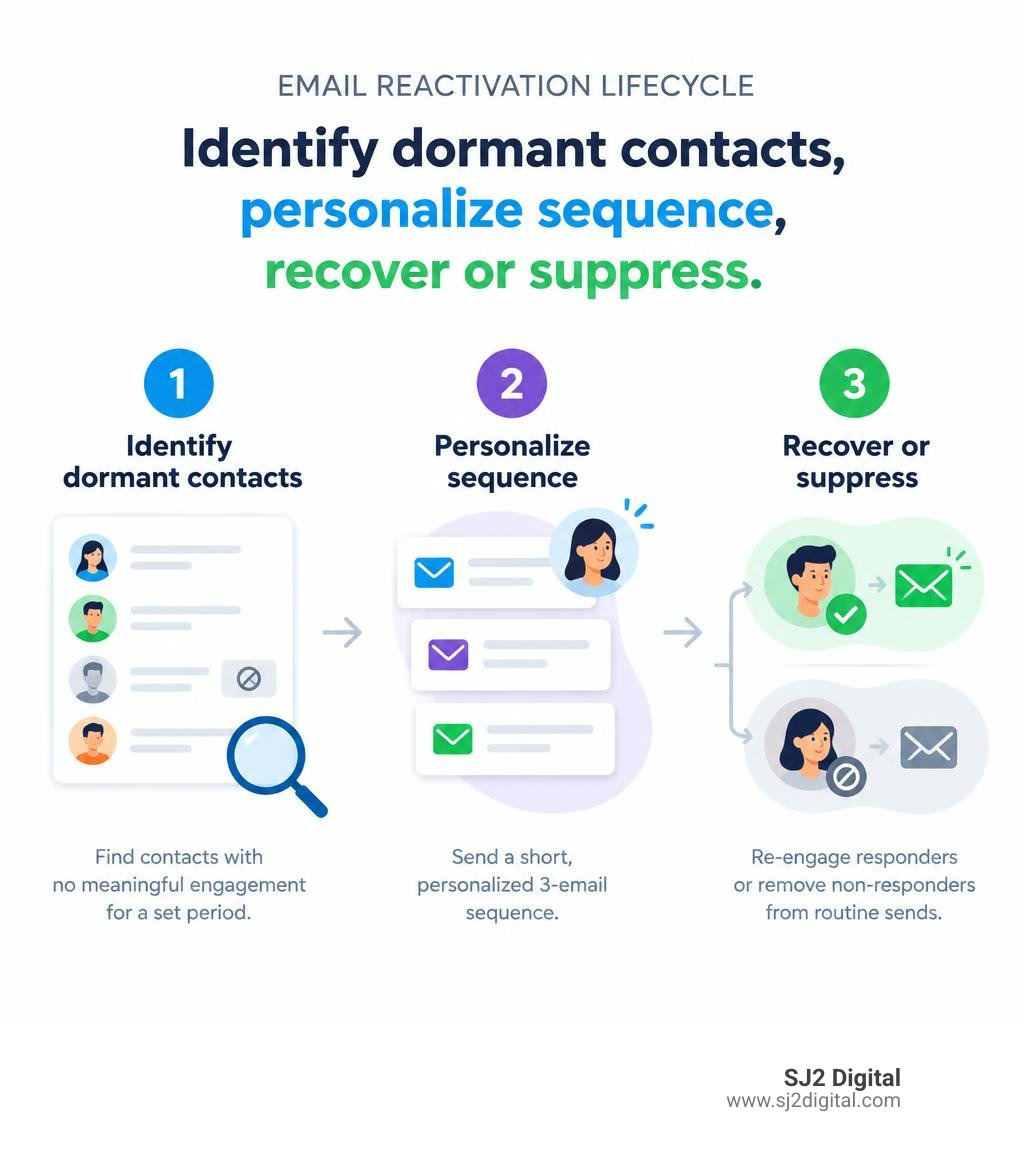
Email reactivation campaigns help you recover value from people who once showed interest but no longer click, reply, inquire, or buy. Start by isolating contacts with no meaningful engagement during a business-appropriate period, send a short and personalized 3-email sequence, then suppress people who still do not respond.
- Send a helpful check-in with one clear action.
- Follow with relevant value, such as a useful guide, new service, or tailored offer.
- Send a final preference-update or last-call message, then remove non-responders from routine sends.
For senior-living operators, this can mean reconnecting with families who downloaded a guide, toured a community, or asked about availability but then went quiet. A timely, relevant message can restart a conversation without spending more to find an entirely new lead.
This is also a list-health issue, not just a sales tactic. Email databases can decline by roughly 22.5% each year in B2B settings, and repeatedly mailing disengaged contacts can weaken inbox placement. The goal is simple: recover qualified interest where possible and stop sending to people who have clearly moved on.
Understanding Dormancy: Reactivation vs. Retention and Win-Back Flows
When contacts go silent, marketing teams often blur the lines between retention, win-back, and reactivation. Treating these audiences identically results in mismatched messaging, wasted ad spend, and alienated subscribers.
A retention campaign targets active, paying customers who show early warning signs of disengagement—such as dropping login frequencies or declining platform usage—before they cancel. A win-back campaign specifically engages former paying customers or clients who have formally churned, cancelled subscriptions, or stopped purchasing.
In contrast, reactivation campaigns target the broader universe of dormant email subscribers. This group includes cold leads who downloaded a resource months ago and never converted, alongside past buyers who have stopped opening or clicking your communications.
Acquiring a new customer costs 3x to 25x more than retaining or reactivating an existing contact. Furthermore, research indicates that the probability of winning back an existing or past contact sits between 20% and 40%, whereas selling to a brand-new prospect yields a modest 5% to 20% success rate. Yet, an astonishing 73% of companies completely ignore their dormant customers as an ongoing revenue stream.
The median monthly voluntary churn rate across subscription and SaaS business models sits at 4%. For an organization with 1,000 paying accounts at $100 per month, that equates to losing $4,000 in recurring revenue every single month. Failing to systematically re-engage both past customers and cold subscribers leaves significant revenue on the table.
| Campaign Type | Primary Audience | Core Trigger | Main Objective |
|---|---|---|---|
| Retention | Active customers showing reduced platform or product usage | Declining activity or engagement over 14–30 days | Prevent churn before cancellation occurs |
| Win-Back | Cancelled customers, churned accounts, or past buyers | Explicit subscription cancellation or contract end | Secure renewals, reactivate accounts, or win repeat sales |
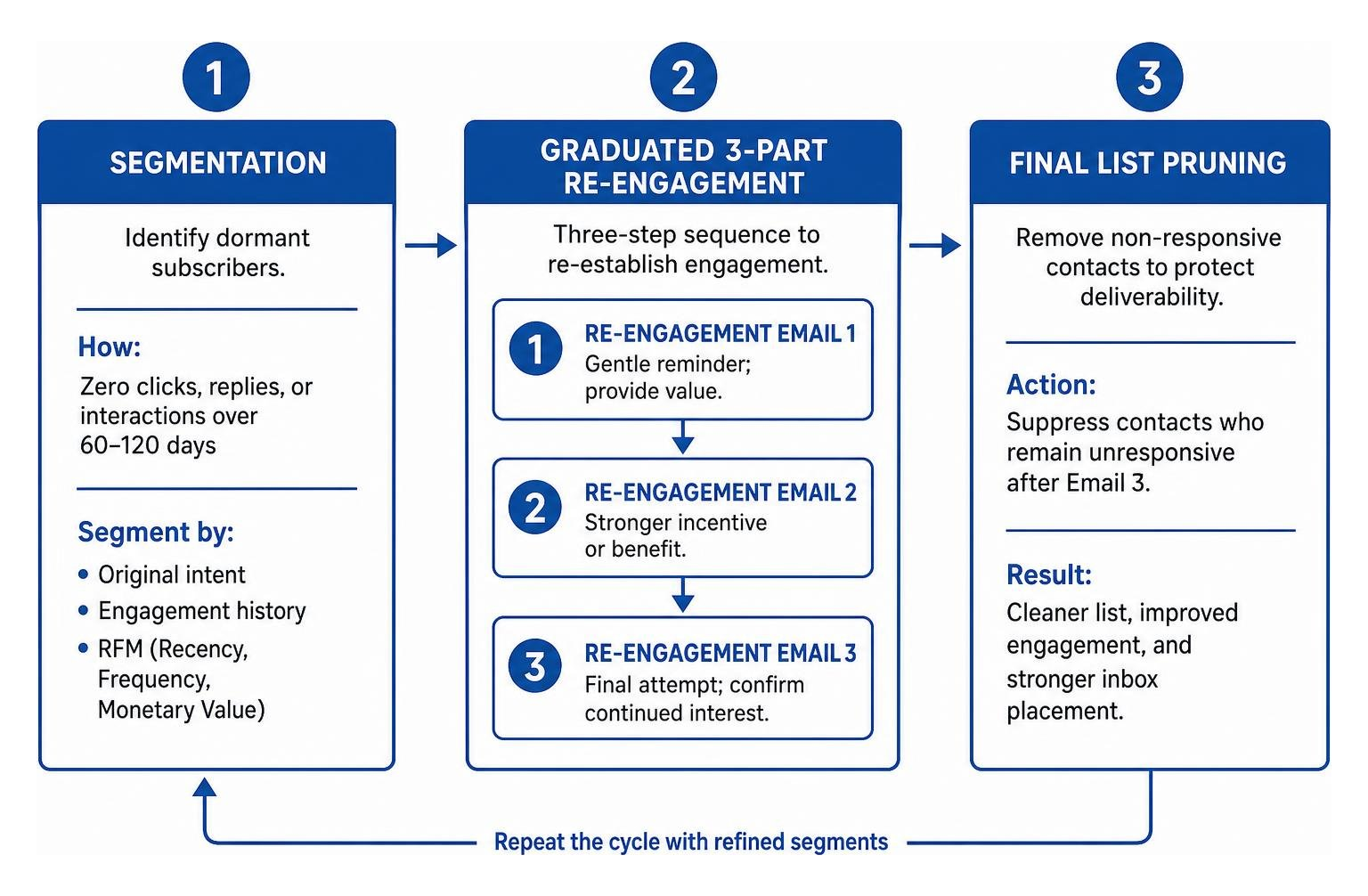
| Reactivation | Dormant newsletter subscribers, cold leads, or disengaged contacts | Zero clicks, replies, or interactions over 60–120 days | Re-establish inbox engagement or cleanly suppress contact |
Establishing Business-Specific Dormancy Thresholds
Defining what makes a subscriber "dormant" depends on your business cycle and publishing cadence. A daily news digest should flag a subscriber as dormant after 30 to 45 days of silence. A weekly B2B newsletter might extend that window to 60 or 90 days. For high-consideration sectors—such as senior care or enterprise technology—dormancy might only trigger after 90 to 120 days of zero interactions.
Timing directly dictates recovery success. Data reveals that 90-day inactive users reactivate at rates around 10% to 12%, whereas 180-day inactive users reactivate at only 2% to 4%. Waiting too long turns a salvageable relationship into permanent detachment.
Relying on open rates to determine dormancy has become obsolete. Apple Mail Privacy Protection (MPP) and automated corporate security filters routinely cache and "open" incoming emails in the background, creating artificial engagement data. Marketers must evaluate explicit interaction signals—namely link clicks, form submissions, authenticated site visits, direct replies, and verified transactions.
The Strategic Blueprint for High-Converting Email Reactivation Campaigns
Re-engaging a cold database requires an intentional strategy rather than a generic blast. Simply sending a mass message to thousands of cold addresses can damage your technical sender reputation. Modern internet service providers evaluate non-engagement rates; when lists have high disengagement, mailbox providers lower overall deliverability.
Reviewing win-back email deliverability safeguards illustrates why maintaining inactive contacts below 15% yields average inbox placement rates above 95%, while lists harboring over 30% inactive subscribers see placement drop to roughly 76%. Automated workflows represent just 2% of overall sends across modern platforms, yet they account for over 30% of recovered revenue, producing up to 16x higher revenue per send than standard marketing blasts.
Designing Dynamic Segmentation for Email Reactivation Campaigns
Effective re-engagement demands thoughtful segmentation. Blasting an identical message to every disengaged subscriber guarantees poor conversion rates. Instead, divide your dormant database into distinct segments based on their original intent and history:
- RFM Segmentation (Recency, Frequency, Monetary Value): Prioritize contacts who previously spent significant sums or interacted heavily before going silent. High-lifetime-value segments warrant personalized outreach and stronger incentives.
- Stated Churn Reasons: If a contact cancelled after citing pricing, target them with flexible terms or smaller packages. If they left due to product gaps, update them on newly released capabilities.
- Acquisition Source: Treat subscribers who opted in via organic educational content differently from those who entered through paid ad promotions or one-off contest giveaways.
For operators scaling specialized outreach via senior living marketing services, segmenting families based on care type (independent living versus assisted living) and their past tour status ensures follow-ups feel relevant, respectful, and helpful.
The 3-Email Re-Engagement Framework
A structured re-engagement email sequence prevents list fatigue while systematically reviving real interest. High-performing flows achieve open rates between 42% and 57% when focused on a 3-part progression.
Email 1: The Helpful Check-In (Day 1)
Acknowledge the quiet period without sounding defensive. Ask a straightforward question, confirm whether their goals have changed, or offer a simple one-click option to update their communication preferences. Keep formatting clean and include a single call-to-action (CTA).
Email 2: The Value Refresh (Day 5–7)
Present a useful resource directly aligned with their original interest. This can be an educational guide, an overview of recent improvements, or a practical case study. If your model supports commercial incentives, introduce an exclusive offer or an invitation to an upcoming private session here.
Email 3: The Direct Breakup (Day 12–14)
State clearly that you plan to remove them from future mailings to keep their inbox tidy. Provide a single link allowing them to remain on the list if they choose. If they do not click, automatically move them to a suppression list. A clear breakup email frequently drives the highest conversion rate of the entire sequence by creating genuine urgency.
Crafting Personalized Copy, Incentives, and Multi-Channel Touchpoints
Personalization extends far beyond inserting a first-name merge tag. Referencing a subscriber's previous interactions, past inquiries, or original lead source demonstrates attentiveness. Personalized subject lines raise reactivation open rates from 18% to 31%—a 72% relative improvement.
For detailed playbooks on crafting effective lead recovery copy, review proven customer re-engagement email strategies.
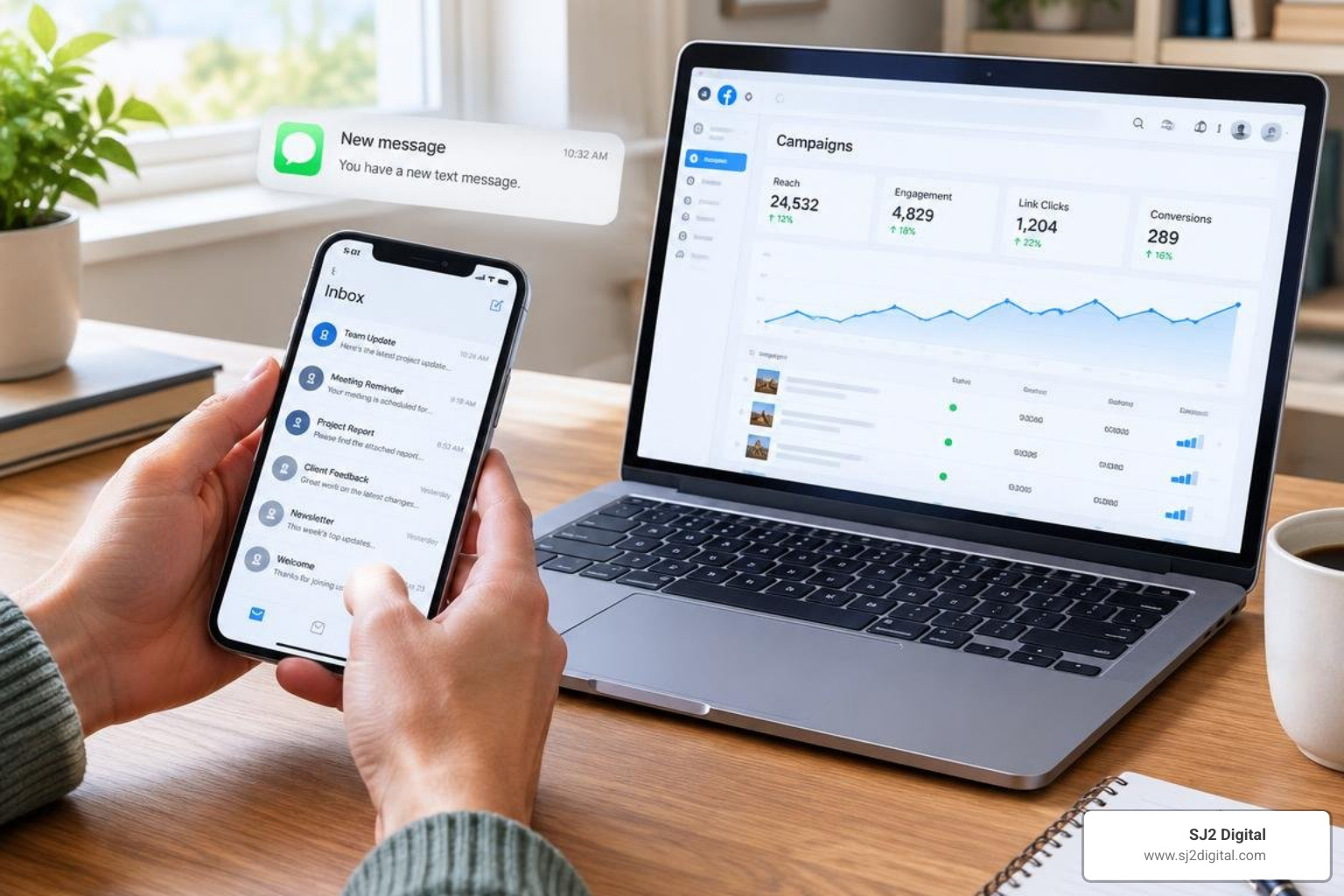
When email alone does not revive a high-value account, multi-channel touches can re-establish contact. Supplementing an email sequence with a short SMS notification after five days of silence, alongside targeted social retargeting ads, can significantly improve recovery rates.
Tailoring Value Propositions to Churn Reasons
Discounts should never serve as your default re-engagement lever. Relying on immediate price drops trains subscribers to wait for markdowns and cuts into your margins. Instead, match the value proposition to the likely reason for their disengagement:
- Educational Summaries: Curate your top insights, practical guides, or industry updates into an easily scannable format.
- Feature and Service Enhancements: Show past users what has improved since their last interaction.
- Concise Resource Letters: If you are wondering how to revive a dead email list without being spammy, delivering immediate tactical value via a clean, text-based document or helpful checklist often outperforms complex graphic templates.
- Preference Customization: Give subscribers total control over sending frequency, allowing them to switch from weekly blasts to a monthly summary.
Avoiding Critical Mistakes That Derail Email Reactivation Campaigns
Many recovery campaigns fall short due to common execution mistakes. Avoid these pitfalls to protect your brand and maintain subscriber trust:
- Guilt-Driven Copy: Subject lines such as "Why are you ignoring us?" or "Did we do something wrong?" cause friction. Use courteous, value-oriented language instead.
- Batch-and-Blast Messaging: Sending the exact same message to cold newsletter subscribers, recent buyers, and disqualified leads lowers engagement and increases spam flags.
- Premature Discounting: Slashing prices right away erodes perceived product quality and fails to address non-price-related objections.
- Hyper-Aggressive Cadence: Sending daily emails to disengaged users leads straight to spam folders. Space touchpoints 4 to 7 days apart.
- Relying Exclusively on Automated Opens: Base your automation triggers on verified clicks and replies, not background open telemetry.
Deliverability Protection, Sunset Policies, and Campaign Measurement
Email service providers like Gmail and Yahoo enforce strict spam thresholds. Keeping your spam complaint rate safely below 0.3% is essential to avoid direct inbox routing penalties.
Repeatedly emailing thousands of dormant addresses invites spam complaints and soft bounces. When major mailbox providers detect poor engagement across your list, they begin routing your regular campaigns straight to the junk folder.
Implementing an Automated Sunset Policy
A sunset policy is an automated rule that suppresses contacts who have not engaged over a defined period and failed to respond to your reactivation sequence.
Suppressing a contact is entirely different from permanently deleting them:
- Suppression: Keeps the record in your database marked as non-mailable. This prevents accidental re-imports from external CRM syncs and preserves historical compliance records.
- Deletion: Erases the contact completely. If you ever upload an older customer list, those deleted addresses could be accidentally re-added, exposing your domain to deliverability risks.
To protect your core domain during large-scale re-engagement initiatives, route high-volume reactivation flows through a dedicated subdomain or separated sending pool while maintaining steady warming cadences.
Tracking ROI and Core Reactivation Metrics
Measure both short-term engagement and long-term financial impact using these core indicators:
- Reactivation Rate: The percentage of dormant contacts who click, reply, or confirm their subscription during the campaign. Aim for 5% to 15% across standard lists.
- Downstream Engagement: Research reveals that 45% of subscribers who re-engage through a reactivation email open and interact with subsequent regular sends.
- Recovered Revenue & Customer Lifetime Value (CLV): Track the pipeline value, direct sales, and retained subscription value generated specifically from recovered contacts.
- Spam Complaint and Unsubscribe Rates: Keep spam complaints below 0.1% (well beneath the 0.3% penalty limit) to maintain pristine domain health.
- Inbox Placement Rates: Monitor seed list placement to verify that your primary domain maintains consistent inbox delivery across all major providers.
Frequently Asked Questions About Email Re-Engagement
How long should you wait before triggering an email reactivation sequence?
Most businesses should trigger an automated sequence after 60 to 90 days of complete disengagement (no link clicks, site visits, or purchases). Daily publishers should set this trigger closer to 30 to 45 days, whereas high-consideration B2B and healthcare operators often use a 90-to-120-day window.
What is the difference between suppressing and deleting unresponsive subscribers?
Suppressing keeps the contact marked as non-mailable within your system, ensuring they cannot be accidentally re-imported during future list uploads or CRM integrations. Deleting completely wipes their record, creating a risk that they might be added back later without historical consent records.
How often should a business run an email reactivation workflow?
Reactivation workflows work best as dynamic, automated triggers that evaluate contacts continuously as they cross your dormancy threshold. If running manual campaigns, execute them once per quarter to protect deliverability without causing subscriber fatigue.
Conclusion
Cold subscribers and quiet leads represent unrealized revenue already sitting in your database. By executing targeted, value-first reactivation flows, you can recover pipeline, lower overall customer acquisition costs, and maintain healthy inbox deliverability.
At SJ2 Digital, we operate on an anti-agency model—delivering transparent results with no long-term contracts, clear performance dashboards, and hands-on senior expertise. We help growing businesses implement high-performing email automations that drive sustainable revenue.
Ready to turn cold contacts into active buyers? Contact our senior team today to build a custom lifecycle strategy for your business.