
Competitor Location Targeting: The Practical Guide to Geo-Conquesting
What Is Competitor Geofencing and How Does It Drive Growth?
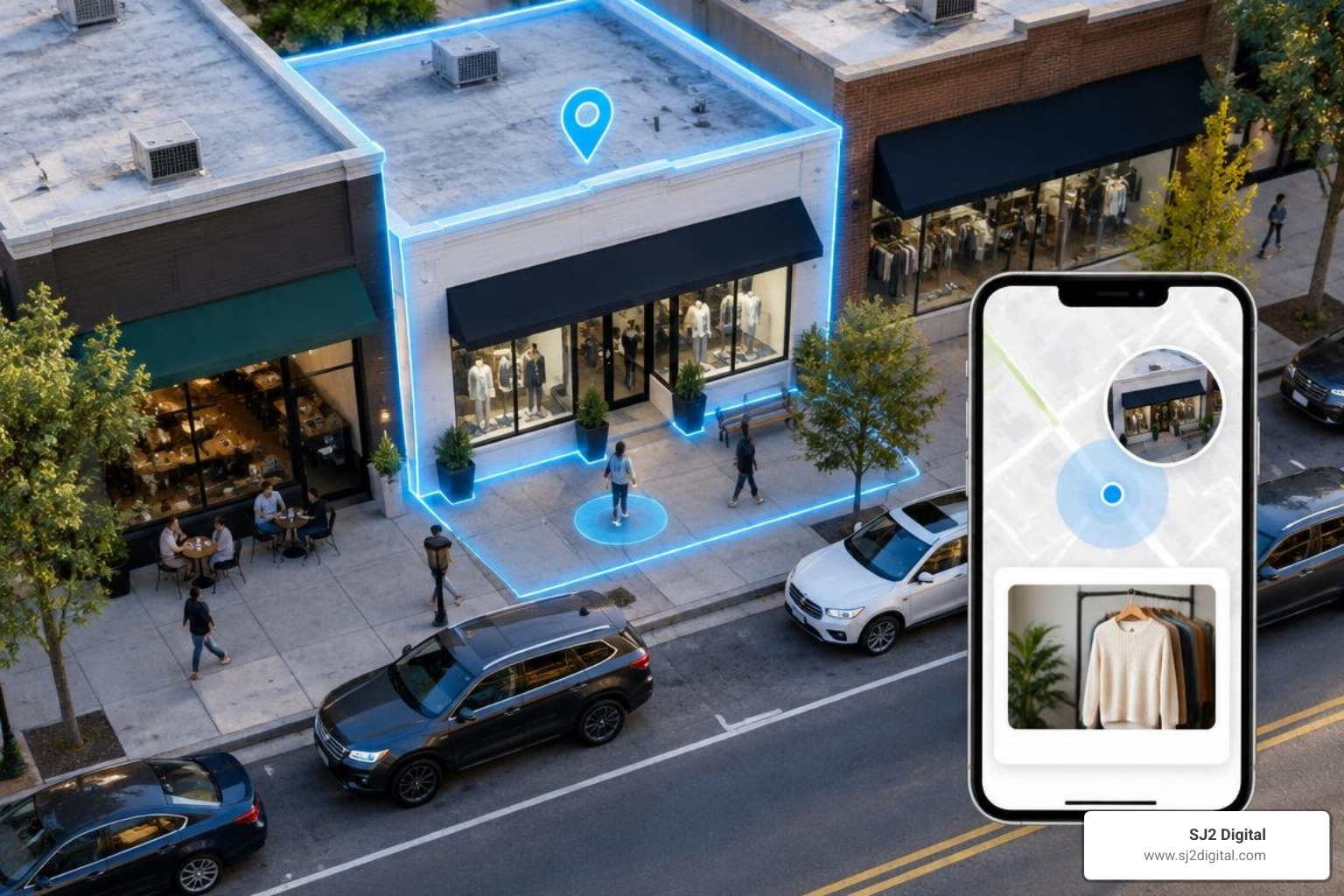
Competitor geofencing—often called geo-conquesting—is a location-based digital advertising strategy that maps virtual perimeters (geofences) around physical competitor locations. Using precise mobile location telemetry such as GPS and network-level data, ad platforms identify mobile devices that cross into those boundaries. Once a device is logged inside the target area for a qualified period, it enters a dedicated audience pool for cross-device retargeting.
Traditional localized advertising relies on broad zip-code targeting or generic radius rings drawn around an address. Those approaches treat everyone within two miles identically, whether they are shopping for your service, walking their dog, or driving past on the highway. In contrast, polygon-based competitor location mapping identifies consumers based on real-world actions. Visiting a competitor’s physical facility is one of the strongest offline indicators of active commercial intent.
Modern geofencing relies on precise spatial boundaries rather than circular radii. By tracing the exact architectural footprint or parking lot of a competitor, advertisers exclude adjacent roadways and non-relevant storefronts. Coupled with dwell-time filters that eliminate transient foot traffic, geo-conquesting turns foot traffic at rival locations into an actionable audience of high-intent prospects.
Post-Visit Retargeting vs Real-Time Interception
A frequent misconception about geofencing is that ads must be pushed instantly while a prospect is physically standing in a competitor’s lobby or showroom. In practice, on-premise real-time interception rarely produces optimal return on ad spend.
When a person is physically touring a rival facility, speaking to a sales representative, or browsing an aisle, their attention is occupied in the physical world. Interrupting them with an immediate banner ad or notification often feels intrusive, and they lack the immediate focus required to fill out a contact form or research an alternative.
Post-visit retargeting shifts the engagement window. Once the platform logs a qualified visit, identity-resolution networks connect that Mobile Advertising ID (MAID) to the user’s broader cross-device identity graph. Over the next several days or weeks, your brand delivers sequenced ad impressions across desktop browsers, mobile apps, connected television (CTV), and digital audio while the consumer is relaxed at home or work evaluating their options.
This delayed cadence provides strategic advantages:
- Household Multi-Screen Exposure: High-consideration services require input from spouses, partners, or adult children. Retargeting across household devices exposes all key stakeholders to your message.
- Storytelling and Value Sequencing: You can run multi-step campaigns that introduce your brand differentiators, display customer testimonials, and follow up with a direct consultation offer.
- Higher Conversion Action Rates: Prospects are more likely to submit detailed inquiry forms or schedule calls when browsing on a primary computer or tablet during leisure hours.
The Science of Proximity: What the Research Proves
Location-based marketing is backed by rigorous empirical testing. In an extensive peer-reviewed study published by Springer Nature, researchers conducted a quasi-experimental field study evaluating geo-conquesting and proximity marketing. The empirical research on proximity marketing and geo-conquesting revealed significant advantages over traditional localized advertising:
- Substantial Sales Growth: Comparative data demonstrated an increase close to 300% in sales results when using precise geofencing technology over conventional broad advertising methods.
- Statistically Significant Foot-Traffic Lift: The study recorded an exposed-group visit rate of 0.48% compared to 0.18% in the unexposed control group ($p < 0.05$), confirming that targeted location campaigns drive incremental physical visits.
- High Audience Engagement: Exposed users generated an average dwell time of 22 minutes and 10 seconds within target facilities, with 59.30% of visits lasting between 5 and 20 minutes and 33.50% lasting up to 40 minutes.
- Distance Decay Realities: The study confirmed a 17.64% decrease in conversion rate for every additional mile between the consumer and the physical establishment.
| Dimension | Traditional Localized Advertising | Programmatic Competitor Geofencing |
|---|---|---|
| Audience Definition | Broad geography (zip codes, arbitrary radius) | Physical visit history at competitor facilities |
| Intent Quality | Mixed (includes non-intending residents) | High (verified physical discovery behaviour) |
| Spatial Precision | Low to medium (mile-based radiuses) | High (custom polygon fences down to ~1,000 sq ft) |
| Cross-Device Capabilities | Device-siloed targeting | Household cross-device graph (Mobile, Desktop, CTV) |
| Passerby Filtering | None (everyone in zip code is targeted) | Dwell-time thresholds (e.g., 5+ minutes minimum) |
| Attribution Capability | Clicks, CTR, platform impressions | Multi-touch view-throughs & Physical Conversion Zones |
The scientific consensus is clear: targeting consumers based on real-world location behavior drastically cuts ad waste, provided the campaign accounts for physical distance and dwell criteria.
Strategic Applications: When Geo-Conquesting Makes Sense
Geo-conquesting is not a universal solution for every product. For low-friction convenience purchases—such as gas stations or fast food—consumers select options based almost entirely on immediate physical convenience. Geo-conquesting delivers its highest return on investment when deployed in categories characterized by deliberate research, comparison shopping, and high customer lifetime value.
Key industries where competitor geofencing excels include:
- Senior Living & Memory Care: Families tour multiple communities before choosing an assisted living or memory care facility. Geofencing rival operators allows your community to remain visible across family devices during this emotional decision cycle, reinforcing our dedicated senior living marketing services.
- Automotive Dealerships: Automotive buyers visit several competing dealership lots along an auto row. Retargeting lot visitors with competitive financing terms or inventory incentives captures active buyers before they sign a lease.
- Elective Healthcare, Dental, & Med Spas: Patients seeking specialized care (orthodontics, fertility clinics, cosmetic procedures) routinely book multiple introductory consultations. Geo-conquesting rival clinics keeps your clinical outcomes and patient reviews top of mind.
- Home Services & Commercial Contractors: Remodelers and specialty contractors can geofence big-box trade supply stores or design showrooms to reach active property owners and trade professionals sourcing materials.
- Higher Education & Vocational Training: Colleges and trade schools geofencing competing campus open days and recruiting fairs reach prospective students evaluating career pathways.
High-Consideration Purchasing Cycles
High-consideration purchases feature elongated buying windows spanning weeks or months. Because consumers rarely make a final commitment during their initial site tour or showroom visit, the post-visit evaluation window represents the most vulnerable stage in the customer acquisition journey.
During this window, prospects actively weigh trade-offs: staff-to-resident ratios in assisted living, monthly lease rates on vehicles, financing terms for elective healthcare, or curriculum depth in education. Serving well-timed ads while these comparisons take place positions your brand as a direct alternative, addressing potential objections before a contract is executed.
Avoiding Common Pitfalls in Competitor Geofencing
While the concept of geo-conquesting is straightforward, poor technical execution can quickly waste ad spend. The single most common operational error is treating geofencing like simple map drawing without accounting for spatial noise.

Marketers frequently encounter four environmental pitfalls:
- The Shared Multi-Tenant Building: Placing a generic fence over a competitor located inside a high-rise medical center or office park captures patients visiting unrelated dentists, accountants, or law offices.
- Transit Corridors and Bus Stops: If a competitor’s facility borders a commuter train station or arterial road, an uncalibrated geofence captures thousands of non-prospect commuters daily.
- Overly Broad Polygonal Boundaries: Drawing a loose perimeter that encompasses public sidewalks or neighboring retail stores dilutes the audience with low-intent foot traffic.
- Zero Dwell-Time Filtering: Failing to set minimum duration thresholds means your budget is spent on delivery drivers, postal workers, and pedestrians cutting through parking lots.
To maintain clean audience pools, build tight polygon boundaries around structural interior footprints, exclude parking lots when adjacent to unrelated retail, and enforce strict minimum dwell thresholds.
Building and Refining High-Performing Campaigns
Executing a successful competitor geofencing campaign requires disciplined technical setup, ongoing audience maintenance, and aligned creative assets. Geo-conquesting operates at its highest efficiency when combined with search intent strategies, such as structured senior living pay per click and digital campaigns, creating an integrated digital marketing ecosystem.
Technical Setup for Competitor Geofencing Across Channels
Building an enterprise-grade campaign involves several distinct configuration steps within your programmatic Demand-Side Platform (DSP):
- Polygon Mapping: Construct custom multi-point polygonal geofences around each competitor property. Set boundaries to cover primary facility areas while excluding transit lanes, exterior public sidewalks, and adjacent unrelated establishments.
- Temporal and Dwell Logic: Implement minimum dwell-time parameters (typically 5 to 10 minutes depending on the vertical) and restrict audience capture to standard business operating hours. This filters out maintenance crews, cleaning staff, and overnight foot traffic.
- Negative Geofencing & Self-Exclusion: Always place an exclusionary geofence over your own physical locations. This prevents spending budget to retarget consumers who are already visiting your facilities or staff members working on site.
- Cross-Channel Ad Distribution: Connect audience segments to a multi-channel media mix:
- Programmatic Display: Cost-efficient baseline banners serving high impression frequency across web and mobile apps.
- Connected TV (CTV): High-impact 15- and 30-second non-skippable ads delivered directly on living-room screens to reach all household decision-makers.
- Video Pre-Roll & Native: Educational video assets on YouTube and premium digital publishers showcasing community tours, resident outcomes, or client case studies.
- Digital Audio: Targeted 15-second audio spots on platforms like Spotify and digital podcasts, reinforcing value propositions during commute hours.
Offer Differentiation and Landing Page Optimization
Driving qualified prospects to a generic homepage undermines campaign performance. When targeting visitors from a known competitor, your messaging must directly counter the specific friction points, pricing models, or amenity gaps associated with that rival.
A high-converting geo-conquesting landing page should feature several key elements:
- A Focused Value Proposition: Immediately state what distinguishes your offering (e.g., higher staff-to-patient ratios, transparent pricing structures, all-inclusive care plans, or immediate availability).
- Direct Side-by-Side Comparison Architecture: Use clear comparison matrices that objectively contrast your features, warranty lengths, room square footages, or clinical services against category averages.
- Social Proof and Independent Reviews: Prominently position third-party ratings, family testimonials, and industry accreditations.
- Low-Friction Primary Conversion Actions: Provide an intuitive, low-barrier next step. For high-consideration purchases, offer a direct tour scheduling calendar, downloadable pricing guide, or complimentary consultation request rather than forcing a hard commitment.
Measuring True Return and Foot-Traffic Lift
Evaluating geo-conquesting solely on Click-Through Rate (CTR) misinterprets how location targeting functions. In programmatic display and mobile environments, clicks are often accidental, and high click volume does not reliably correlate with commercial intent.
To understand genuine return on investment, measure campaign success across four foundational pillars:
- Viewable Impression Health: In programmatic delivery, aim for a minimum viewability rate of 65% across display inventory, ensuring ads appear fully on screen long enough to make an impact.
- Post-Click Engagement & Inquiries: Track lead generation volume, including phone inquiries, schedule-a-tour form completions, and pricing PDF downloads from the target audience.
- View-Through Site Conversions: Modern attribution modeling connects users who saw an ad (without clicking) and subsequently navigated to your website within 7 to 30 days to complete a conversion action.
- Physical Conversion Zone Uplift: For brick-and-mortar operators, measuring physical foot-traffic attribution demonstrates whether ad exposure led to an in-person visit.
Conversion Zones and Attribution Modeling
A Conversion Zone is an invisible virtual perimeter mapped over your own physical business location. When a consumer who was previously exposed to your geo-conquesting campaign crosses into your conversion zone with their mobile device, the platform logs a verified physical visit.
Conversion zone attribution calculates several critical performance metrics:
- Cost Per Physical Visit (CPV): Total campaign expenditure divided by total verified physical visitors to your facility.
- Visit Frequency: The average number of times an exposed prospect returns to your location during the attribution window (benchmarked at ~1.09 in academic proximity studies).
- Average Dwell Duration: The actual time visitors spend inside your building (e.g., verifying an average visit length exceeding 20 minutes, confirming an in-depth tour occurred rather than a brief delivery drop-off).
- Incremental Foot-Traffic Lift: By comparing visit rates between users exposed to your ads and an unexposed control group, you can mathematically isolate the exact volume of physical visits generated solely by your campaign.
Balancing Audience Precision with Scale
Every spatial and temporal restriction applied to a geofence improves audience quality while reducing total audience scale. Finding the right balance between precision and reach is essential for budget efficiency.
If an audience pool is too narrow (for example, geofencing a single boutique competitor that receives only five visitors per day), the campaign will suffer from delivery starvation. The DSP will struggle to pace your budget, and frequency will cap out quickly on a handful of devices.
To ensure sufficient scale without sacrificing lead quality:
- Curate a Balanced Competitor Set: Map between 5 and 15 direct competitor properties across your operational territory to establish a sufficiently large audience pool.
- Broaden Creative Formats: Expand delivery across display banners, native widgets, video pre-roll, and CTV to increase inventory opportunities for each identified device.
- Expand the Historical Lookback Window: Depending on the platform, you can target devices that visited competitor locations within the past 14 to 30 days, expanding audience size while maintaining intent.
Frequently Asked Questions About Geo-Conquesting
What is the difference between radius targeting and geo-conquesting?
Radius targeting places a simple circular boundary (e.g., a 1-to-5-mile ring) around a business address or zip code, delivering ads to anyone whose mobile device registers within that broad geography. It makes no distinction between active shoppers, local residents, or highway commuters.
Geo-conquesting, by contrast, relies on custom multi-point polygon fences drawn around specific competitor building footprints. It requires the device to physically enter and dwell inside a rival commercial establishment, identifying verified comparison shoppers while filtering out non-relevant local traffic.
What minimum physical size is required for an accurate geofence?
For reliable GPS triangulation and spatial accuracy, target locations should measure no less than 1,000 square feet.
While modern cellular and GPS telemetry can map boundaries within a few meters, building footprints smaller than 1,000 square feet increase the risk of boundary drift—where users on adjacent sidewalks or access roads are mistakenly logged as visitors. For smaller facilities, setting strict dwell-time parameters (e.g., 8+ minutes) helps ensure only genuine on-premise visitors are added to your audience.
How long should you retarget a competitor's visitor?
The ideal retargeting window depends on the average purchasing lifecycle of your product or service category:
- Short-Cycle Retail & Dining: 3 to 7 days.
- Automotive & Specialized Services: 14 to 21 days.
- Healthcare, Senior Living, & Education: 30 to 45 days.
Retargeting beyond your industry's natural buying window leads to ad fatigue, higher effective acquisition costs, and wasted impressions served to consumers who have already made a purchasing decision. Continually monitor recency decay and frequency caps across your programmatic DSP to optimize your media investment.
Conclusion
Competitor location targeting allows marketers to identify and engage high-intent prospects based on real-world actions rather than broad demographic assumptions. By establishing precise polygon perimeters, enforcing dwell-time filters, and engaging visitors across multi-screen channels, businesses can intercept comparison shoppers during their most critical decision-making window.
At SJ2 Digital, our approach relies on an "anti-agency" model: no rigid long-term contracts, fully transparent live reporting dashboards, and direct collaboration with senior-level programmatic practitioners who treat your ad budget like their own. If you are ready to modernize your media mix and capture market share from local competitors, explore our specialized programmatic advertising solutions for senior living and healthcare to launch your pilot campaign today.