
What High-Performing Brands Look for in a Facebook Ads Agency
1. A Creative-Led Cold Traffic Engine

High-performing brands look for a Facebook ads agency that combines creative-first testing frameworks, full-funnel search and social architecture, robust Conversions API (CAPI) tracking, transparent pricing models, and full asset ownership. These capabilities allow brands to scale cold traffic profitably while maintaining accurate measurement and control over their accounts.
With over 2.6 billion people logging into Meta platforms every single month, cold traffic on Facebook is not in short supply. The real challenge is capturing meaningful attention. The days of slapping a stock image over a generic promotional headline and letting automated audience targeting do the heavy lifting are long gone. Today, creative is your primary targeting tool.
When cold prospects scroll through their feeds, an ad that looks like a corporate billboard gets skipped immediately. High-performing brands partner with agencies that prioritize native creative—assets that seamlessly match organic feed aesthetics, hook viewers within the first three seconds, and deliver compelling direct-response messaging.
Whether scaling direct-to-consumer ecommerce brands or generating inquiries for high-consideration decisions, creative-led strategies prevent rapid ad fatigue, maintain lower cost per mille (CPM), and unlock sustainable scale. For example, specialized DTC scaling programs like those seen in leading Facebook and Meta Ads Agency for Ecommerce frameworks demonstrate how creative-first production systematically lowers acquisition costs while driving multi-fold conversion lifts.
How a Facebook Ads Agency Tests High-Converting Creative
A systematic creative testing framework separates elite performance marketing from guesswork. Top agencies deploy structured dynamic creative testing (DCT) environments to isolate variables:
- Hook Variations: Testing 3 to 5 distinct opening video hooks or visual styles against the same core message to maximize scroll-stop rates.
- Body Copy & Angles: Evaluating short, punchy direct copy against long-form educational copy addressing different emotional triggers and objections.
- Visual Formats: Cycling between user-generated content (UGC), authentic behind-the-scenes video, carousel breakdowns, and clean lifestyle stills.
- Offer Presentation: Testing risk-reversal hooks, guide downloads, virtual tours, and direct scheduling calls to action.
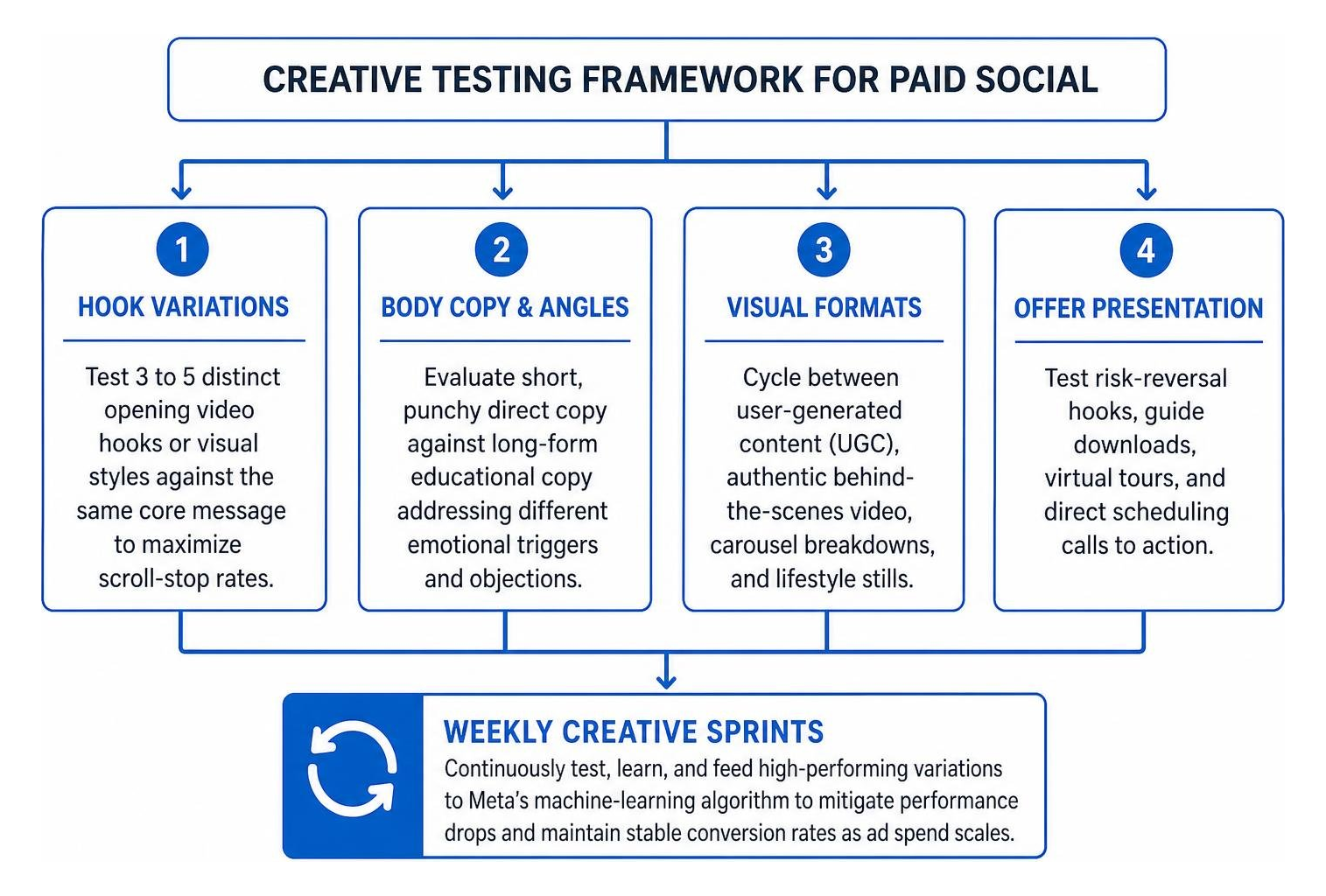
By running disciplined weekly creative sprints, we continuously feed Meta's machine-learning algorithm with fresh, high-performing variations. This approach mitigates performance drops and ensures conversion rates remain stable as ad spend increases.
Moving Beyond Hyper-Targeting with Native Formats
A common mistake in Meta ad accounts is over-segmenting audiences into tiny, hyper-targeted demographic silos. When you restrict Meta’s delivery engine with narrow parameters, CPMs spike and frequency skyrockets, exhausting your audience within days.
Modern Meta advertising relies on broad targeting paired with native direct-response copy. By allowing the algorithm to find high-intent users based on creative engagement signals, your ads reach relevant prospects at a significantly lower cost. The copy and creative do the filtering: high-intent buyers self-select, while unqualified users simply scroll past.
2. Full-Funnel Architecture Integrating Paid Search and Social
Facebook ads rarely operate at peak efficiency in isolation. While Meta excels at demand generation (introducing your solution to prospects who may not actively be searching yet), search engines excel at demand capture (harvesting active intent).
High-performing brands build integrated funnels where social prospecting works alongside high-intent senior living pay-per-click campaigns and targeted programmatic advertising channels to engage buyers at every stage of their decision-making process.
| Channel Focus | Facebook Ads (Meta) | Google Ads (Paid Search) | Programmatic Display & Video |
|---|---|---|---|
| Primary Role | Demand Generation & Discovery | Demand Capture (High Intent) | Omnichannel Reach & Awareness |
| Audience Mindset | Passive / Problem-Aware | Active Search / Solution-Aware | Passive / Ambient Engagement |
| Targeting Strength | Creative-led algorithmic matching | Keyword intent & search queries | Contextual, behavioral, geofencing |
| Funnel Stage | Top-of-Funnel & Mid-Funnel | Bottom-of-Funnel Conversion | Full-Funnel Retargeting & Lift |
| Scaling Mechanism | Native creative testing & CAPI | Search volume & keyword expansion | Cross-exchange inventory bidding |
Structuring Campaigns for Predictable Scaling
To scale budgets predictably without causing cost per acquisition (CPA) spikes or return on ad spend (ROAS) collapse, account structures must remain clean and consolidated. Modern campaign architecture generally features three streamlined layers:
- Broad Prospecting (Advantage+ & Consolidated Cold Traffic): Capturing new demand using proven creative winners and algorithm-driven delivery.
- Middle-of-Funnel Engagement: Re-engaging users who interacted with social content, watched videos, or visited key landing pages but did not convert.
- Bottom-of-Funnel Conversion & Retention: Delivering targeted messaging to overcome specific objections, highlight reviews, and drive direct consultations or sales.
Consolidating budgets into fewer, high-volume ad sets allows campaigns to exit the learning phase faster, stabilizing performance as spend scales.
Unifying Demand Generation and Search Capture
When paid social campaigns run effectively, branded search volume on Google naturally rises. Prospective customers see an engaging video on Facebook or Instagram, remember the brand, and search for it later on their desktop or mobile browser.
Without an integrated full-funnel strategy, competitors can bid on your brand terms and steal that generated demand. Unifying paid social and search ensures consistent tracking, prevents attribution blind spots, and delivers a seamless multi-touch journey from first social impression to final conversion.
3. Modern Technical Tracking with Pixel and Conversions API (CAPI)
Accurate data infrastructure is non-negotiable in digital marketing. Relying solely on browser-based tracking pixels leads to severe signal loss caused by ad blockers, browser privacy restrictions, and cross-device journeys.
High-performing brands require a Facebook ads agency with the technical expertise to implement robust server-side tracking through Meta's Conversions API (CAPI), ensuring data flows cleanly into optimization engines. This technical foundation is a core component of comprehensive digital marketing services designed for sustainable growth.

Eliminating Wasted Spend Through Signal Optimization
In our account audits, we find wasted ad spend in virtually every underperforming Meta ad account—often driven by broken event tracking, duplicate conversions, or improper optimization events.
By connecting CRM data and first-party customer touchpoints directly to Meta via server-side endpoints, agencies achieve:
- Higher Event Match Quality (EMQ): Improving audience matching and lookalike modeling accuracy.
- Offline Conversion Tracking: Passing closed-won leads and qualified tour data back into Meta to optimize for high-value customers rather than cheap, low-intent clicks.
- Privacy-First Resilience: Complying with evolving privacy standards while maintaining campaign measurement integrity.
Reporting on True Business Metrics Over Platform ROAS
In-platform Meta Ads Manager reporting frequently over-attributes revenue due to default 7-day click and 1-day view attribution windows. If an agency only reports platform-level ROAS, you risk making scaling decisions based on inflated numbers.
Top partners evaluate marketing performance using holistic metrics:
- Blended Marketing Efficiency Ratio (MER): Total revenue divided by total ad spend across all channels.
- Customer Acquisition Cost (CAC): Fully loaded cost to acquire a paying customer or qualified move-in.
- Customer Lifetime Value (LTV): Long-term revenue generated per acquired customer, guiding acceptable acquisition thresholds.
- Cost Per Qualified Lead (CPQL): Measuring bottom-line business value rather than raw, unvetted form fills.
4. Evaluating Pricing Models and Ownership with a Facebook Ads Agency
Choosing an agency partner involves evaluating alignment, operational ethics, and financial transparency just as much as technical expertise.

Why Asset Ownership and Live Reporting Dashboards Matter
You should always retain 100% ownership of your digital assets. Some legacy agencies construct "black box" setups where campaigns are managed inside proprietary agency accounts. If you decide to part ways, you lose your pixel data, historical campaign learnings, and creative libraries.
A transparent agency model provides:
- Complete Admin Access: Campaigns run inside your own Meta Business Manager and ad accounts.
- Data Portability: All pixel data, custom audiences, and conversion histories remain yours permanently.
- Live Reporting Dashboards: Unfiltered access to real-time performance data, eliminating manipulated monthly PDFs.
Vetting a Facebook Ads Agency on Pricing Models and Performance Guarantees
Agencies deploy several pricing structures, each carrying distinct incentives:
- Flat Monthly Retainer: A predictable monthly management fee. Aligns well when focusing on stable lead generation and high-touch account management.
- Percentage of Ad Spend: Fees scale alongside your advertising budget. Common in ecommerce, though it can occasionally incentivize budget increases over efficiency.
- Hybrid (Base Retainer + Performance Share): A modest base retainer paired with an incentive tied to verified revenue or qualified volume improvements.
Be cautious of unconditional "guarantees" (such as a 30% performance improvement or free work). While appealing on the surface, aggressive short-term guarantees can incentivize agencies to prioritize low-quality conversion spikes, over-attribute platform credit, or discount aggressively to hit volume quotas at the expense of profit margins.
Frequently Asked Questions About Meta Advertising Partners
How do Facebook ads differ from Google Ads in a growth strategy?
Facebook Ads focuses on demand generation by serving targeted, native visual content to cold audiences based on user behaviors and interests. Google Ads focuses primarily on demand capture, showing text and shopping ads to prospects actively typing high-intent search queries. A complete growth strategy uses Facebook to build awareness and interest, while Google captures users ready to convert.
What are the risks of aggressive performance guarantees?
Guarantees tied strictly to platform-reported metrics can lead agencies to manipulate attribution windows, pursue cheap low-intent clicks, or run heavy discount promotions that erode profit margins. Sustainable growth comes from disciplined creative testing, clean data tracking, and transparent business reporting.
What pricing structures do top paid social agencies use?
Most reputable agencies operate on flat monthly retainers, tiered spend percentages, or hybrid models combining a base fee with performance incentives. Top partners avoid locking clients into long-term restrictive contracts, relying instead on performance and transparency to maintain client relationships.
Conclusion
Maximizing return on ad spend across Meta platforms requires technical precision, continuous creative innovation, clean data tracking, and strategic alignment with search channels.
At SJ2 Digital, we operate under an anti-agency philosophy. We do not believe in locking clients into rigid, long-term contracts or hiding performance behind opaque monthly reports. Our senior-level specialists work directly inside your accounts, delivering transparent live dashboards, hands-on optimization, and custom strategies tailored to your exact budget and growth objectives.
To see how our performance models deliver measurable results across challenging, high-consideration sectors, explore our verified performance case studies or discover our tailored senior living social marketing programs. Ready to scale your acquisition pipeline? Contact our team today for a transparent account audit and strategy review.