
The Step-by-Step Blueprint: Marketing Automation for Lead Generation
Automate Lead Capture and Nurturing Without Losing the Human Touch

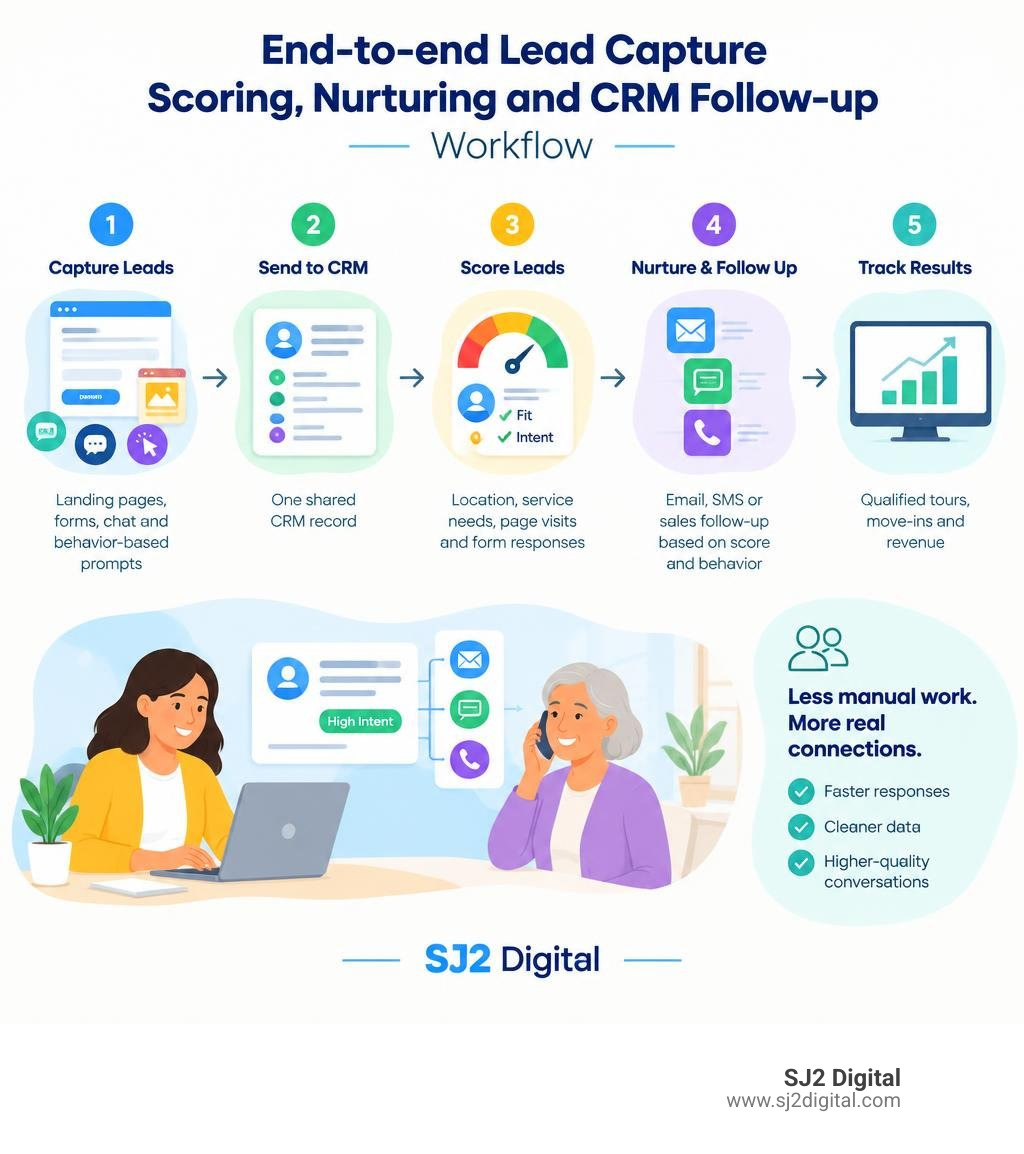
Marketing automation for lead generation helps you capture inquiries, organize them in a CRM, score their intent, and send timely follow-ups without relying on someone to do every task by hand.
A practical starting point is simple:
- Capture leads with clear landing pages, forms, chat, and behavior-based website prompts.
- Send every new contact to one shared CRM record.
- Score leads using fit and intent signals, such as location, service needs, page visits, and form responses.
- Trigger relevant email, SMS, or sales follow-up based on that score and behavior.
- Track which sources create qualified tours, move-ins, and revenue - not just form fills.
For senior-living operators, this can mean responding quickly when a family member requests information, then continuing the conversation with useful, relevant messages until they are ready to schedule a tour. The goal is not to automate every human interaction. It is to remove slow handoffs, missed follow-ups, and unclear reporting so staff can focus on high-intent prospects.
Why Marketing Automation for Lead Generation Outperforms Manual Outreach
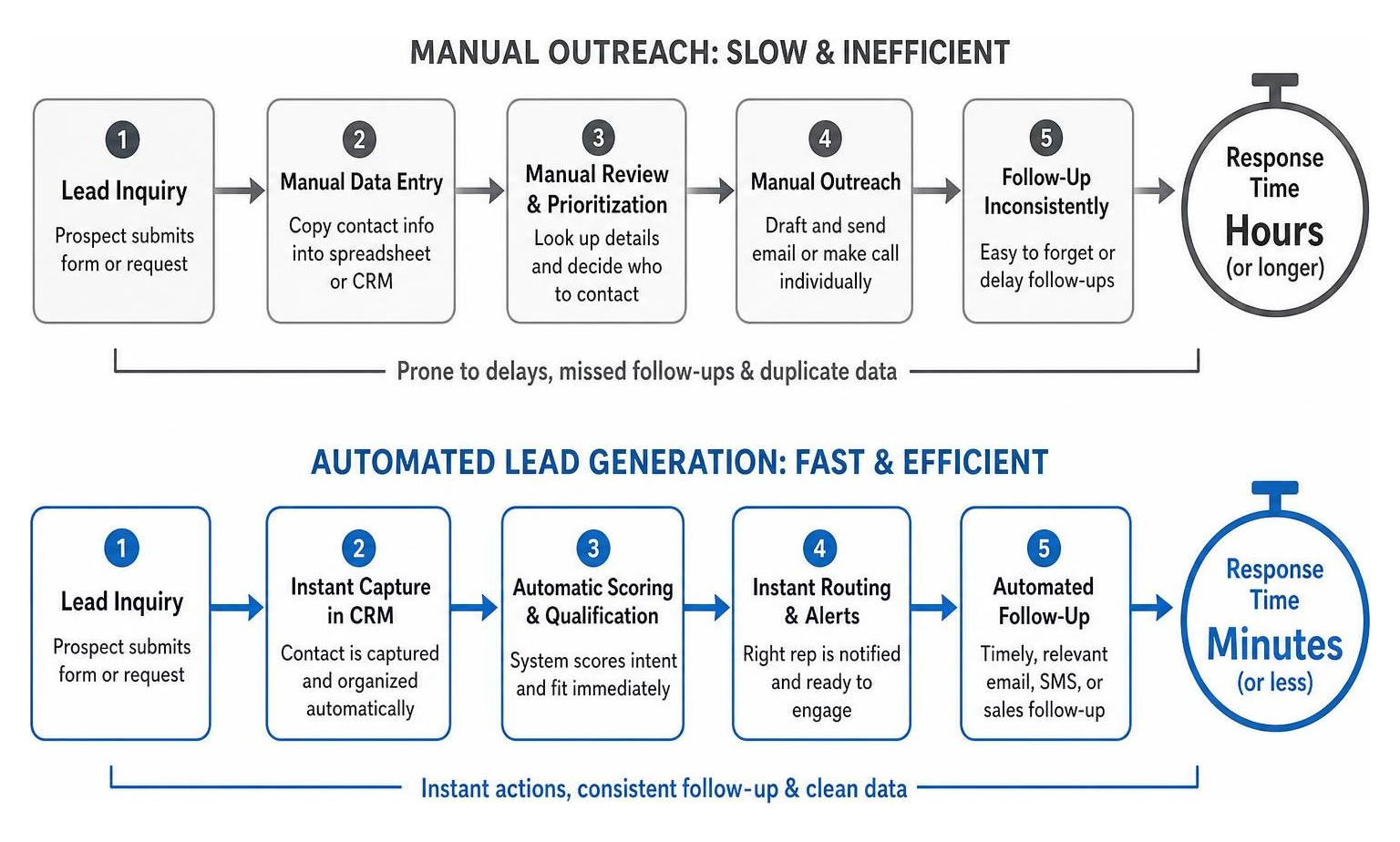
Manual lead generation is exhausting. If your team spends hours each day copying contact info from web forms into spreadsheets, typing individual emails, or guessing which prospect to call first, you are bleeding pipeline.
Relying on manual tasks leads to friction. Inquiries sit untouched for hours, prospects lose interest, and messy data entry leads to duplicate contacts. Automation removes the human bottleneck from data entry and routing, allowing human connection to happen at the exact moment a prospect is ready to talk.
Sales teams that automate workflows experience a 14.5% boost in productivity and up to a 12.2% reduction in overhead costs. When systems handle lead routing automatically, response times improve by up to 33%.
Manual Inefficiency vs. Automated Velocity
Speed to lead determines conversion rates. Research shows that contacting an inbound lead within five minutes makes them three times more likely to convert than reaching out after thirty minutes. When a prospect submits an inquiry, they are actively looking for solutions. If you make them wait half a day, they have already moved on to your competitor.
Automated systems bridge this gap through instant trigger actions. The moment a visitor submits an inquiry on high-intent paid search campaigns, the system can enrich their contact profile, assign a lead score, and execute a round-robin routing rule to alert the right sales rep within seconds.
Lead Scoring and CRM Data Synchronization
Not every lead who fills out a form is ready to buy today. Treating a student downloading an ebook the same as a decision-maker requesting pricing wastes your sales team's energy.
Automation solves this through dynamic lead scoring based on two criteria:
- Fit criteria (Demographics/Firmographics): Company size, job title, industry, geographic location, or budget.
- Behavioral intent: High-value web page visits (such as pricing or floor-plan pages), content downloads, email opens, and form submissions.
When integrated directly with your customer relationship management (CRM) software, lead scores update in real time. 74% of CRM users report significantly improved access to customer data when automation engines sync bi-directionally. When a lead's behavioral score crosses a defined threshold, the CRM automatically notifies a sales rep with complete context on what that prospect viewed, ensuring a relevant sales conversation.
Building an Integrated Multi-Channel Lead Generation Stack
A modern lead generation engine relies on a connected stack of specialized tools communicating in real time through native integrations and API webhooks.

When running targeted organic search strategies, traffic lands on your site from various intent stages. An integrated stack ensures that no matter where a lead enters your ecosystem, their data flows into a unified customer profile.
Designing Your Marketing Automation for Lead Generation Architecture
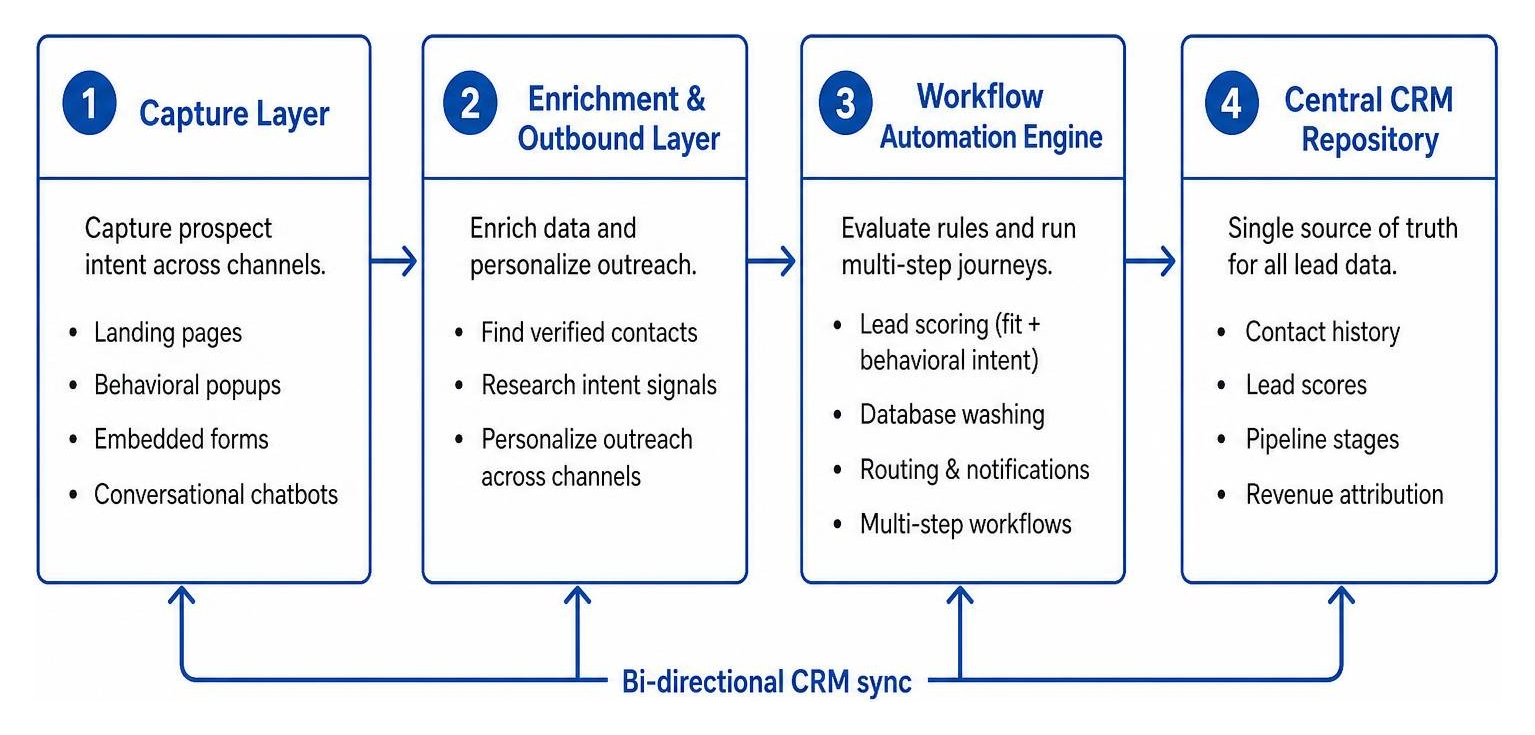
An effective automation architecture consists of four distinct layers:
- The Capture Layer: Landing pages, behavioral popups, embedded forms, and conversational chatbots designed to capture prospect intent.
- The Enrichment & Outbound Layer: Tools that find verified contact information, research intent signals, and personalize initial outreach.
- The Workflow Automation Engine: Middleware and enterprise tools that evaluate rules, manage database washing, and direct multi-step journeys.
- The Central CRM Repository: The single source of truth storing contact history, lead scores, active pipeline stages, and revenue attribution.
B2B vs. B2C Stack Customization
How you configure your automation stack depends heavily on your transaction model and sales cycle length:
- B2B and High-Consideration Services: Characterized by longer sales cycles, higher contract values, and multiple decision-makers. Stacks require robust visitor de-anonymization, account-based marketing (ABM) scoring, automated LinkedIn outreach, and deep CRM integrations.
- B2C and Fast-Cycle Transactions: Characterized by shorter consideration periods and individual buyers. Stacks prioritize real-time SMS triggers, mobile messaging, dynamic on-site product recommendations, and multi-channel programmatic advertising remarketing loops.
The Step-by-Step Lead Capture and Visitor Identification Blueprint
Generating leads on autopilot starts by capturing interest without creating unnecessary friction for the user.
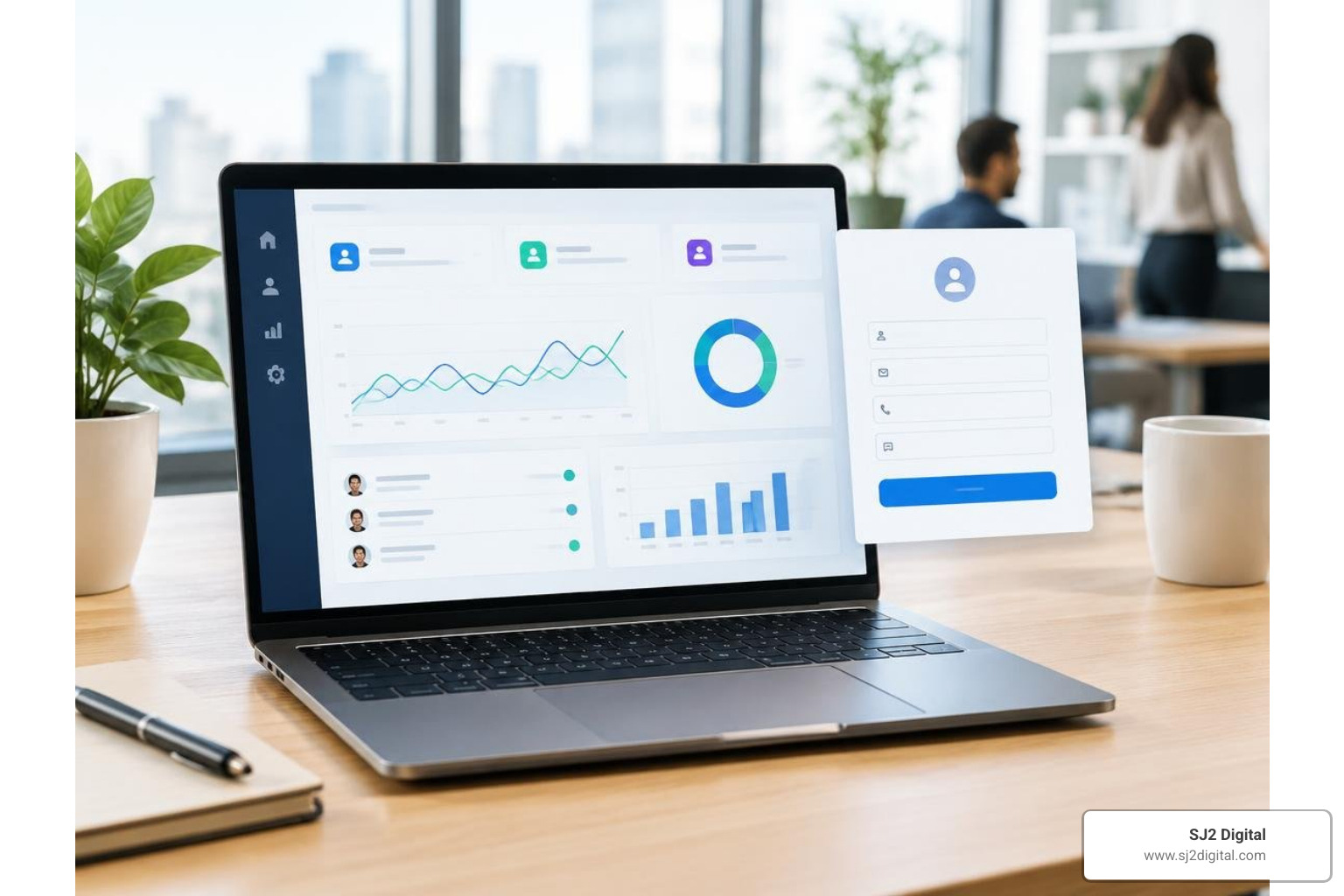
When driving traffic from paid social media lead funnels, capturing the lead on their first visit requires a balance between gathering information and maintaining conversion rates.
High-Converting Capture Mechanisms and Behavioral Popups
Static sidebar forms rarely convert modern web visitors. High-converting websites use behaviorally triggered capture elements tailored to what the user is doing on the page:
- Exit-Intent Overlays: Triggered when a desktop cursor moves toward the browser close button, offering a targeted resource or consultation before the visitor bounces.
- Scroll-Depth Prompts: Displaying a relevant case study or checklist once a visitor reads past 60% of an educational article.
- Progressive Profiling: Asking for only name and email during the first interaction, then requesting company size or specific timeline requirements on their second or third visit.
De-Anonymizing B2B Traffic with Visitor Identification
Between 95% and 98% of your website visitors will leave without ever filling out a form. For B2B organizations and high-ticket service providers, visitor identification tools use reverse IP lookup to de-anonymize that traffic.
These platforms identify the company domain associated with the visitor's IP address, revealing which target accounts are browsing your pricing or service pages. You can then trigger automated outbound sequences targeting decision-makers at those specific accounts.
When conducting outbound B2B prospecting, channel selection matters. LinkedIn is 277% more effective than Facebook and Twitter for generating B2B leads, making automated LinkedIn connection and messaging cadences a high-impact complement to email outreach.
Automated Nurturing Workflows: Email, SMS, and Conversational Chatbots
Capturing a lead is only the first step. The majority of your inbound inquiries are not ready to purchase immediately. Automated nurturing delivers educational, relevant touchpoints over weeks or months to keep your brand top-of-mind.
Using specialized omnichannel marketing automation platforms, you can coordinate touchpoints across email, SMS, and messaging apps based on real-time prospect actions.
Trigger-Based Nurture Sequences and Dynamic Personalization
Linear "drip campaigns" that blast every contact with an identical message every Tuesday are outdated. Modern nurturing uses conditional logic based on prospect behavior:
- Resource Download Trigger: Sends the requested asset immediately, followed three days later by a relevant case study, and five days later by an invitation to a live demo.
- High-Intent Page Visit Trigger: Sends a personalized check-in from a sales rep when an existing lead revisits your pricing or floor plans page after two weeks of inactivity.
- Stalled Pipeline Trigger: Delivers answers to common objections when a lead has remained in a discovery stage for more than 14 days.
- Event or Webinar Attendance Trigger: Routes attendees into a product demo sequence while sending the recording and key takeaways to no-shows.
Omnichannel Follow-Up Cadences and Re-Engagement
Email alone is rarely enough to maximize conversion rates. Combining channels expands reach and accelerates qualification:
- Conversational AI Chatbots: Handle common prospect inquiries 24/7. Modern AI chat tools can increase qualified leads by 45% and reduce time-to-first-contact by answering questions, collecting contact details, and booking meetings directly on sales calendars.
- SMS Messaging: Delivers time-sensitive alerts, appointment confirmations, and quick check-ins with open rates regularly exceeding 90%.
- Re-Engagement Sequences: Automatically identify contacts that have not engaged in 60 to 90 days, offering a low-friction resource to reactivate interest or cleanly purging inactive emails to protect deliverability.
Tracking Performance and Preventing Pipeline Quality Decay
Deploying automated workflows without ongoing monitoring leads to technical debt and wasted spend. High-performing teams continuously review data to ensure workflows deliver revenue, not just vanity metrics. You can see how these systems impact bottom-line metrics across our proven agency case studies.
Measuring the ROI of Marketing Automation for Lead Generation
According to economic analysis, organizations adopting automated lead generation workflows can see up to a 40% reduction in customer acquisition costs (CAC) and a 25% improvement in sales cycle length.
| Performance Metric | Manual Lead Generation | Automated Lead Generation |
|---|---|---|
| Average Response Time | Hours to Days | Under 5 Minutes |
| Lead Qualification | Subjective / Manual Review | Objective Real-Time Scoring |
| Nurturing Consistency | Sporadic Rep Follow-Up | 100% Reliable Triggered Flows |
| Sales Rep Time Allocation | 60% Admin & Data Entry | 80%+ Active Selling Conversations |
| Data Synchronization | Prone to Human Error | Bi-Directional Real-Time Sync |
To accurately calculate ROI, track closed-loop metrics including:
- Cost per Qualified Lead (CPQL)
- Lead-to-Opportunity Conversion Rate
- Pipeline Velocity (Time from initial capture to closed deal)
- Sales Pipeline Value Generated per Channel
Avoiding Stack Fragmentation and Lead Hygiene Pitfalls
Automation systems can fail when tools do not communicate cleanly. Common pitfalls include:
- Data Silos: Running disconnected capture widgets that do not sync back to your core CRM creates duplicate records and blind spots.
- Over-Automation: Bombarding prospects with simultaneous emails, SMS messages, and reps reaching out without centralized cadence control.
- Ignoring Negative Scoring: Failing to subtract points for unqualified behaviors (e.g., career page visits, unsubscribes, out-of-market locations) results in sales reps wasting time on poor-fit leads.
- Compliance Neglect: Failing to capture clear consent and provide simple opt-out mechanisms violates regulations like GDPR and CAN-SPAM, endangering your domain deliverability.
Frequently Asked Questions About Marketing Automation for Lead Generation
Does automated lead generation reduce lead quality?
No, when set up properly, automation increases lead quality. Quality declines only when teams use automation purely to increase top-of-funnel volume without qualification filters. By setting strict ideal customer profile (ICP) parameters, negative scoring rules, and progressive profiling forms, automation acts as a 24/7 gatekeeper—passing only vetted, sales-ready prospects to your team.
How long does it take to see measurable results from marketing automation?
Most businesses see operational improvements within the first 30 to 45 days, particularly in response times and data accuracy. Measurable increases in conversion rates, pipeline volume, and lower acquisition costs typically become clear within 60 to 90 days as automated nurture sequences mature and provide actionable attribution data.
What is the primary difference between marketing automation and lead generation automation?
Marketing automation is an umbrella category that covers all automated marketing tasks across the entire customer lifecycle, including customer onboarding, loyalty programs, and retention marketing. Lead generation automation is a specialized subset focused specifically on identifying, capturing, qualifying, and nurturing top-of-funnel prospects until they become sales-ready opportunities.
Conclusion
Building an automated lead generation engine turns unpredictable prospect inquiries into a reliable, measurable growth channel. By combining behavioral capture, real-time lead scoring, and automated omnichannel nurturing, your organization can scale its pipeline without overburdening staff.
At SJ2 Digital, we use an anti-agency model designed around transparency and senior-level execution. We avoid long-term lock-in contracts, provide live dashboards for complete performance visibility, and build customized growth systems tailored to your specific budget.
Explore our advanced email automations to discover how we can help you streamline capture, accelerate follow-ups, and convert more pipeline into revenue.