
Demystifying Programmatic Digital Advertising for Modern Growth Marketers
Why Programmatic Digital Advertising Matters for Growth Marketers

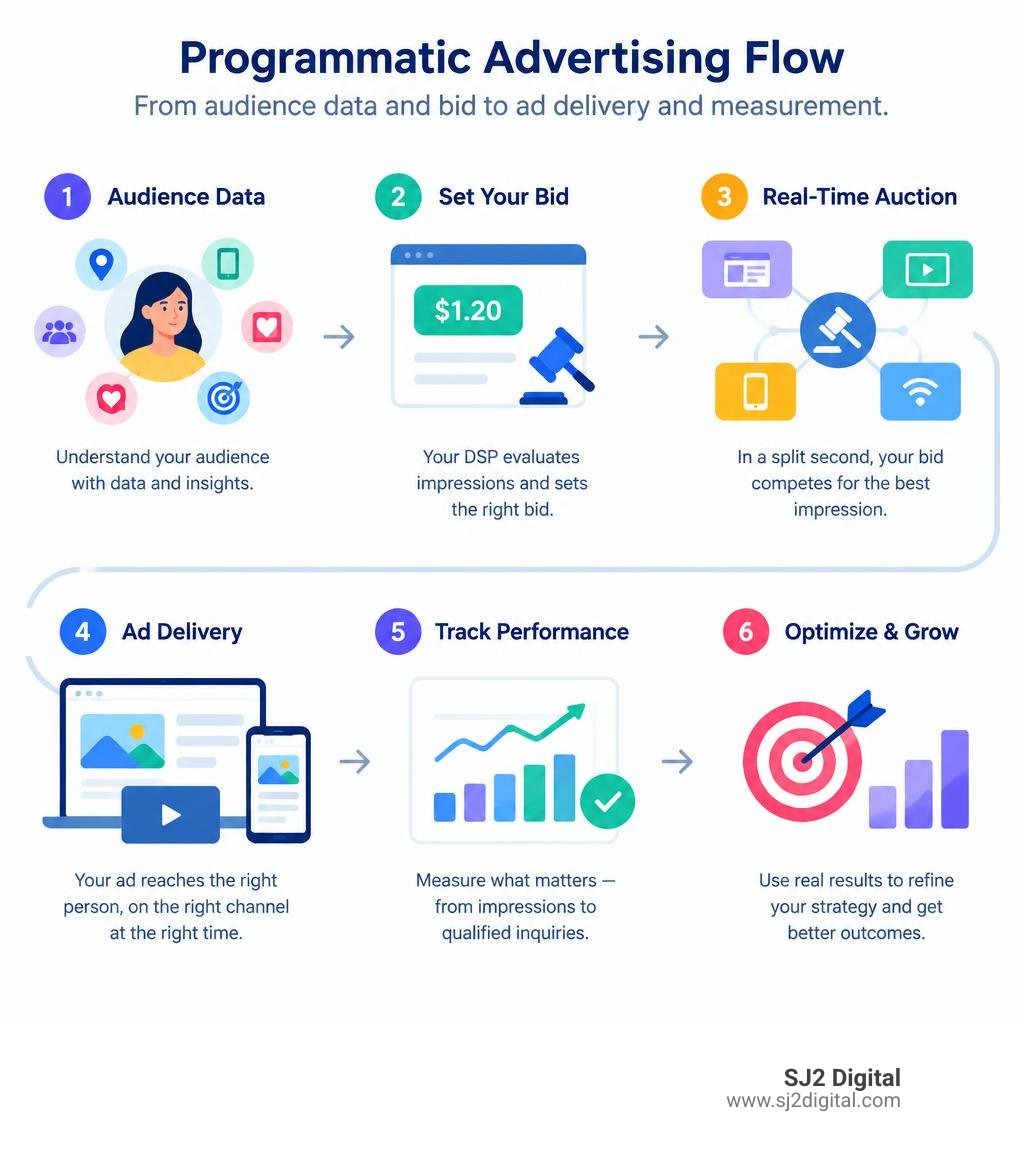
Programmatic digital advertising is the automated purchase of digital ad space using data and real-time bidding. Instead of negotiating individual placements by hand, advertisers set goals, audiences, budgets, and brand-safety rules. Technology then evaluates available impressions and bids for the ones most likely to help meet those goals.
For a senior-living operator, that can mean reaching likely decision-makers and caregivers across websites, video, streaming TV, audio, and mobile - while tracking whether spend produces qualified inquiries rather than just clicks.
Programmatic is now the dominant way digital display media is bought. U.S. programmatic display spending rose from $4.99 billion in 2013 to $156.82 billion in 2024, and it was projected to pass $180 billion in 2025. But automation is not a substitute for strategy. Strong campaigns need clear conversion goals, reliable tracking, quality inventory controls, and transparent reporting on where budget goes.
This guide explains how programmatic buying works, what to measure, where risks such as fraud and hidden fees appear, and how modern marketers can use it to make smarter media decisions.
Core Mechanics of Programmatic Digital Advertising: How the Ecosystem Works

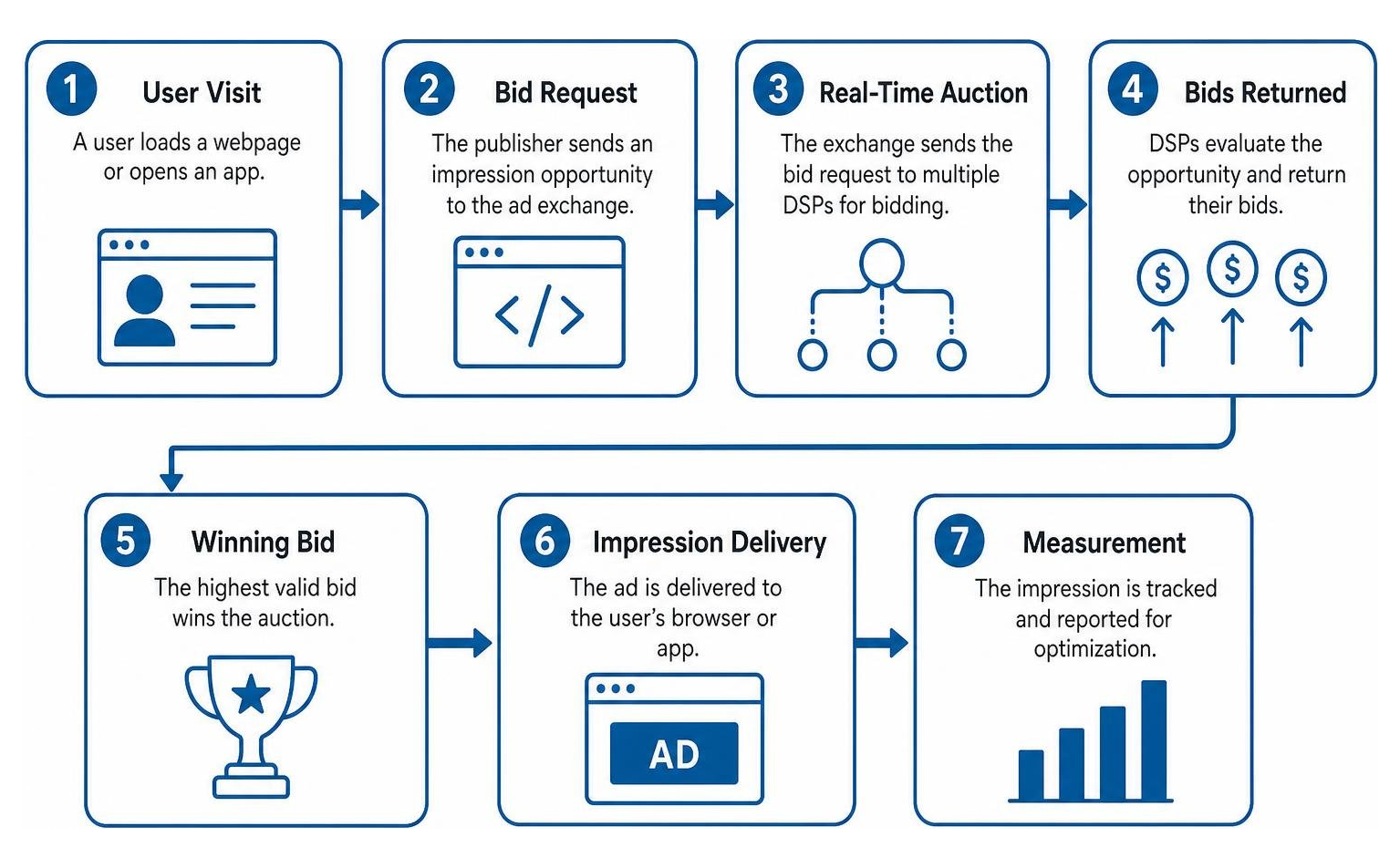
At its core, automated media buying relies on seamless communication between platforms that represent buyers and sellers. When a consumer loads a webpage or opens a streaming application, an auction occurs in the background via OpenRTB protocols within a window of roughly 100 milliseconds.
To handle these massive transaction volumes without latency bottlenecks, modern ad tech relies on high-speed infrastructure such as specialized cloud infrastructure for real-time bidding. This private networking architecture connects publishers and advertisers across regions, allowing systems to evaluate millions of bid requests per second and deliver relevant creative assets instantly.
Demand-Side Platforms (DSPs) vs Supply-Side Platforms (SSPs)
The programmatic marketplace operates through two primary engines:
- Demand-Side Platforms (DSPs): Software that advertisers and agencies use to buy ad inventory across multiple ad exchanges. DSPs allow marketers to configure targeting criteria, manage bidding algorithms, set frequency caps, and optimize campaigns in real time based on audience signals.
- Supply-Side Platforms (SSPs): Software used by publishers to make their ad inventory available to buyers. SSPs help publishers maximize yield by managing automated auctions, setting floor prices, and connecting their spaces to multiple ad exchanges simultaneously.
- Ad Exchanges: The digital marketplaces where DSPs and SSPs meet. When an SSP sends an impression request, the exchange opens the floor to DSPs, determines the winning bid based on predefined auction rules, and serves the ad.
For businesses looking to capture high-intent audiences, orchestrating these platforms requires a cohesive strategy. Pairing automated inventory buys with tailored digital marketing services ensures every touchpoint reinforces your brand's overarching growth objectives.
The 4 Programmatic Deal Types: Open Exchange to Programmatic Direct
Programmatic media buying is not a one-size-fits-all auction. Depending on the desired level of inventory control, pricing certainty, and audience specificity, transactions flow through four primary deal types:
| Deal Type | Pricing Model | Inventory Access | Auction Dynamics | Best Use Case |
|---|---|---|---|---|
| Open Marketplace (RTB) | Dynamic CPM | Open to all registered advertisers | Open real-time auction with price floors | Broad reach, audience discovery, and scale |
| Private Marketplace (PMP) | Dynamic / Negotiated CPM | Invitation-only | Closed auction among select buyers | Premium publisher placements with brand safety |
| Preferred Deals | Fixed CPM | 1-to-1 unreserved | No auction; buyer has first right of refusal | Exclusive access to specific high-value inventory |
| Programmatic Guaranteed | Fixed CPM | 1-to-1 reserved | Direct reservation; guaranteed impression volume | High-visibility brand launches and sponsorships |
In recent years, advertisers have shifted substantial budgets toward Private Marketplaces and Programmatic Direct deals to secure premium publisher inventory and avoid brand-safety risks.
Key Benefits and Strategic Challenges in Modern Programmatic Buying
Programmatic buying transforms manual marketing workflows into automated, data-informed operations. However, maximizing its potential requires balancing its efficiency against supply-chain transparency challenges.
What is Programmatic Digital Advertising and How Does It Differ From Traditional Media Buying?
Traditional digital media buying relied heavily on manual insertion orders (IOs), prolonged rate negotiations, and static ad placements across single websites. This approach often locked advertisers into inflexible contracts with limited audience customization.
In contrast, automated buying introduces:
- Audience-First Targeting: Bids are evaluated on user intent, location, device behavior, and demographics rather than solely on the website category.
- Real-Time Dynamic Pricing: Marketers pay a fair-market price for individual impressions rather than flat, upfront fees.
- Cross-Channel Agility: Campaigns can pivot budget across display, video, audio, and connected TV mid-flight based on conversion performance.
- Holistic Channel Coordination: Programmatic display works best when integrated with other performance channels, such as targeted search advertising strategies, creating full-funnel coverage from discovery to direct search queries.
Navigating Brand Safety, Fraud Prevention, and Privacy Regulations
Despite its speed and reach, programmatic advertising introduces risks that demand proactive management:
- Ad Fraud and Waste: Global ad fraud losses represent a significant challenge for digital marketers. Sophisticated bots, domain spoofing, and hidden ad stacks can siphon ad spend if left unchecked.
- Supply Chain Opacity: Studies show that intermediary tech fees can consume a notable portion of programmatic ad budgets before the dollar reaches working media. Maintaining clear supply paths ensures investment drives real consumer engagement.
- Made-for-Advertising (MFA) Sites: Low-quality sites filled with auto-refreshing banners and clickbait content can inflate impression numbers without driving real business results. Robust whitelists and domain filtering prevent budget waste on MFA properties.
- Privacy Compliance: With strict regulations like GDPR and CCPA, advertisers must rely on consent management platforms, clean tag governance, and high-quality first-party data rather than unverified third-party lists.
Advanced Execution: AI Bidding, Emerging Channels, and Campaign Measurement

Modern programmatic platforms utilize machine learning to analyze context, predict conversion likelihood, and automate bid pricing in fractions of a second.
Using sophisticated AI models in programmatic media buying enables supply-path optimization (SPO), dynamic creative optimization (DCO), and automated frequency capping across diverse media channels.
Modern Channels: Expanding Programmatic Digital Advertising Across CTV, DOOH, and Audio
Automated buying is no longer confined to desktop banner ads. Today's campaigns span an omnichannel media ecosystem:
- Connected TV (CTV): Streaming television offers living-room engagement paired with digital targeting precision, letting brands reach cord-cutters on premium streaming apps.
- Digital Out-of-Home (DOOH): Programmatic DOOH allows advertisers to trigger digital billboards and transit displays based on real-time factors like foot traffic patterns, weather changes, and time of day.
- Programmatic Audio: Streaming podcasts and digital music platforms offer high-attention environments to connect with listeners during screen-free moments.
- Integrated Social Synergy: Coordinating programmatic touchpoints with multi-channel social campaigns reinforces brand messaging across every device a prospect uses daily.
Essential KPIs and Measurement Frameworks for Programmatic ROI
Tracking surface-level vanity metrics can give a false sense of success. Growth marketers evaluate performance through business-focused key performance indicators:
- Cost Per Completed View (CPCV) & View-Through Rate (VTR): Essential for video and streaming campaigns to ensure media reaches active viewers.
- Cost Per Acquisition (CPA) & Return on Ad Spend (ROAS): Evaluates how efficiently campaigns drive actions like form submissions, brochure downloads, or scheduled tours.
- Viewability Lift: Ensuring ads meet industry viewability standards (at least 50% of pixels in view for 1 to 2 seconds).
- Multi-Touch Attribution: Moving beyond basic last-click models to understand how top-of-funnel programmatic touches nurture prospects through to final conversion.
To see how data-driven campaign structuring produces tangible business results, review our real-world marketing case study results.
Frequently Asked Questions About Programmatic Advertising
How much does programmatic advertising cost compared to traditional digital ads?
Programmatic pricing operates on a dynamic cost-per-thousand (CPM) model. Costs fluctuate based on audience niche, ad placement quality, format, and seasonal demand. While broad open-exchange display inventory may carry lower CPMs, highly targeted CTV or private marketplace deals command higher rates reflecting their placement quality. Transparent DSP platforms ensure advertisers pay market value without hidden markup margins.
How should marketers evaluate and choose the right DSP?
When choosing a Demand-Side Platform, growth teams should evaluate:
- Inventory Quality & Direct Integrations: Direct access to major SSPs and premium publishers without excessive intermediary hops.
- Fee Transparency: Clear insight into platform take-rates, tech fees, and data charges.
- Machine Learning & AI Capabilities: Proven predictive bidding algorithms that optimize for real business conversions rather than cheap clicks.
- Live Reporting Dashboards: Real-time visibility into placements, domains, and conversion metrics.
How does the deprecation of third-party cookies affect programmatic targeting?
The decline of third-party cookies has shifted programmatic toward privacy-conscious targeting solutions. Marketers are finding success through:
- First-Party Data Activation: Onboarding CRM lists, email subscribers, and past customer data for secure lookalike modeling and retention campaigns.
- AI-Powered Contextual Targeting: Analyzing on-page sentiment, semantic context, and real-time content topics to place ads near relevant subject matter without tracking individual browsing history.
- Universal ID Frameworks: Utilizing authenticated identity solutions that respect consumer privacy preferences.
Conclusion
Programmatic buying has permanently transformed how modern brands communicate with their audiences. By replacing manual negotiations with data-driven bidding, advertisers can deliver personalized creative to prospective customers across desktop, mobile, connected TV, digital audio, and out-of-home screens.
Achieving measurable ROI, however, requires strategic oversight, brand-safe inventory curation, and complete transparency into where your budget goes. At SJ2 Digital, we operate on an anti-agency model—providing senior-level strategic execution, transparent live dashboards, and flexible engagements without long-term lock-in contracts.
If you are looking to scale qualified inquiries and inquiries for your communities, explore our approach to high-performing programmatic advertising for senior living and see how intentional media buying can accelerate your growth.