
Introduction
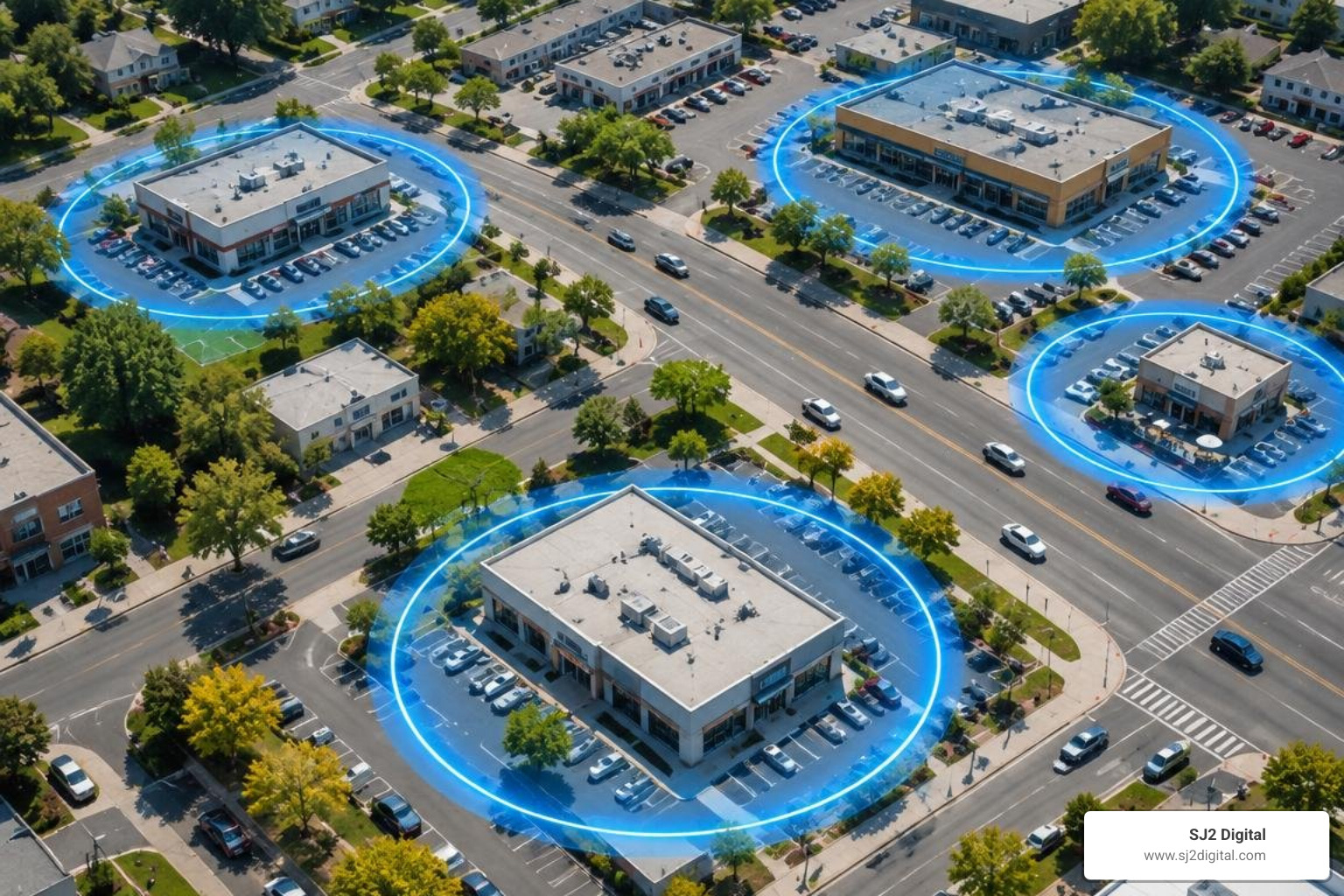
To evaluate a geofencing advertising agency for multi-location growth, prioritize custom polygon precision, verified SDK location data, omnichannel retargeting, and transparent foot-traffic attribution. These criteria help brands avoid wasted ad spend and select a partner that can prove physical visits from digital impressions. Navigating the modern digital advertising ecosystem requires more than broad demographic targeting. For multi-location brands, the real challenge is capturing high-intent consumers precisely when and where their buying decisions happen. Whether you manage a network of healthcare facilities, retail storefronts, or regional service hubs, traditional zip-code targeting often drains ad spend on audiences that never convert.
Location intelligence bridges this gap. By deploying hyper-local targeting, brands can isolate physical perimeters, capture intent signals from real-world visits, and attribute physical foot traffic back to specific digital impressions. Instead of guessing who might be interested in your service, location-based programmatic targeting allows us to construct high-intent audiences based on proven physical presence.
How Location-Based Targeting Works for Modern Brands
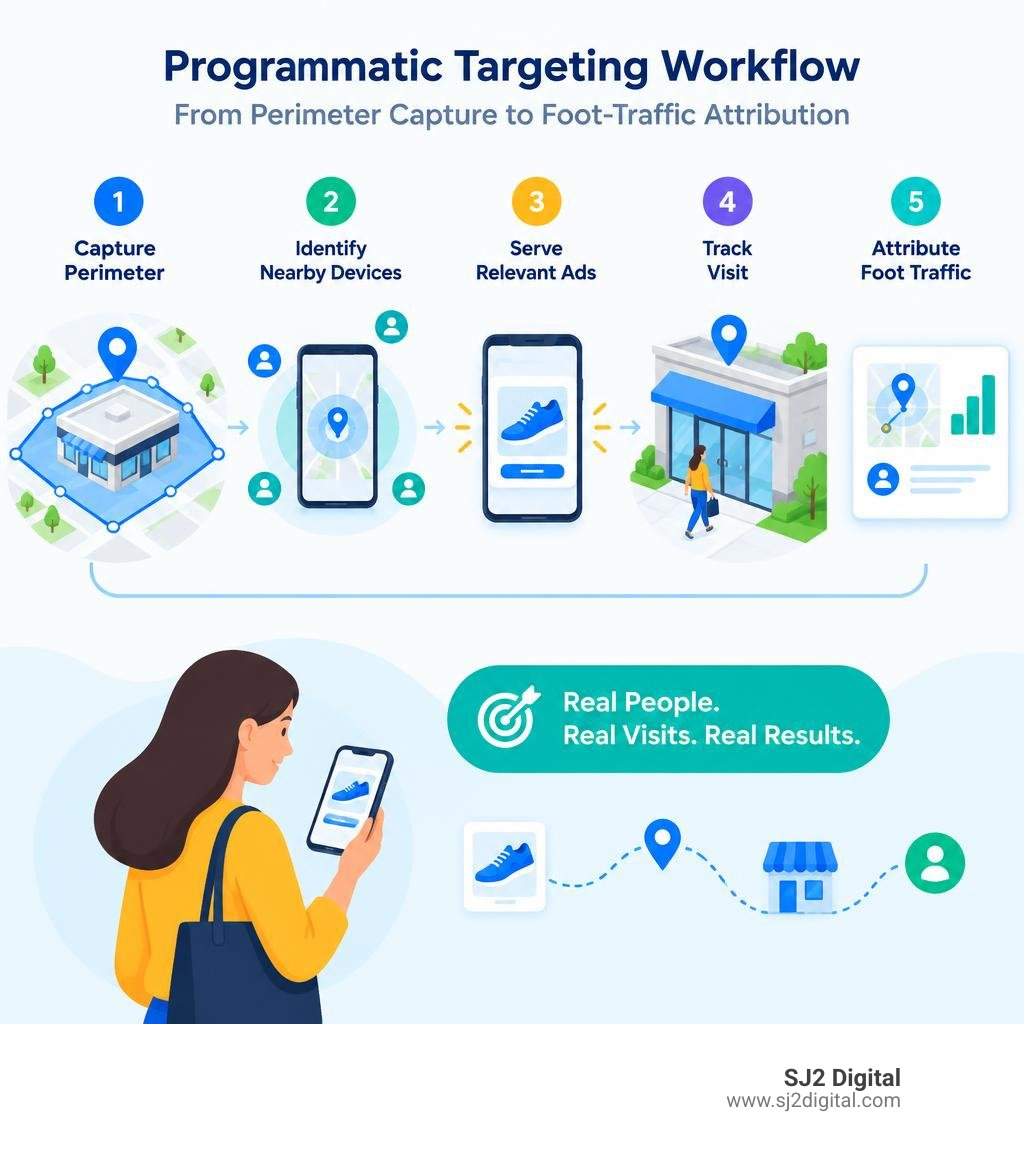
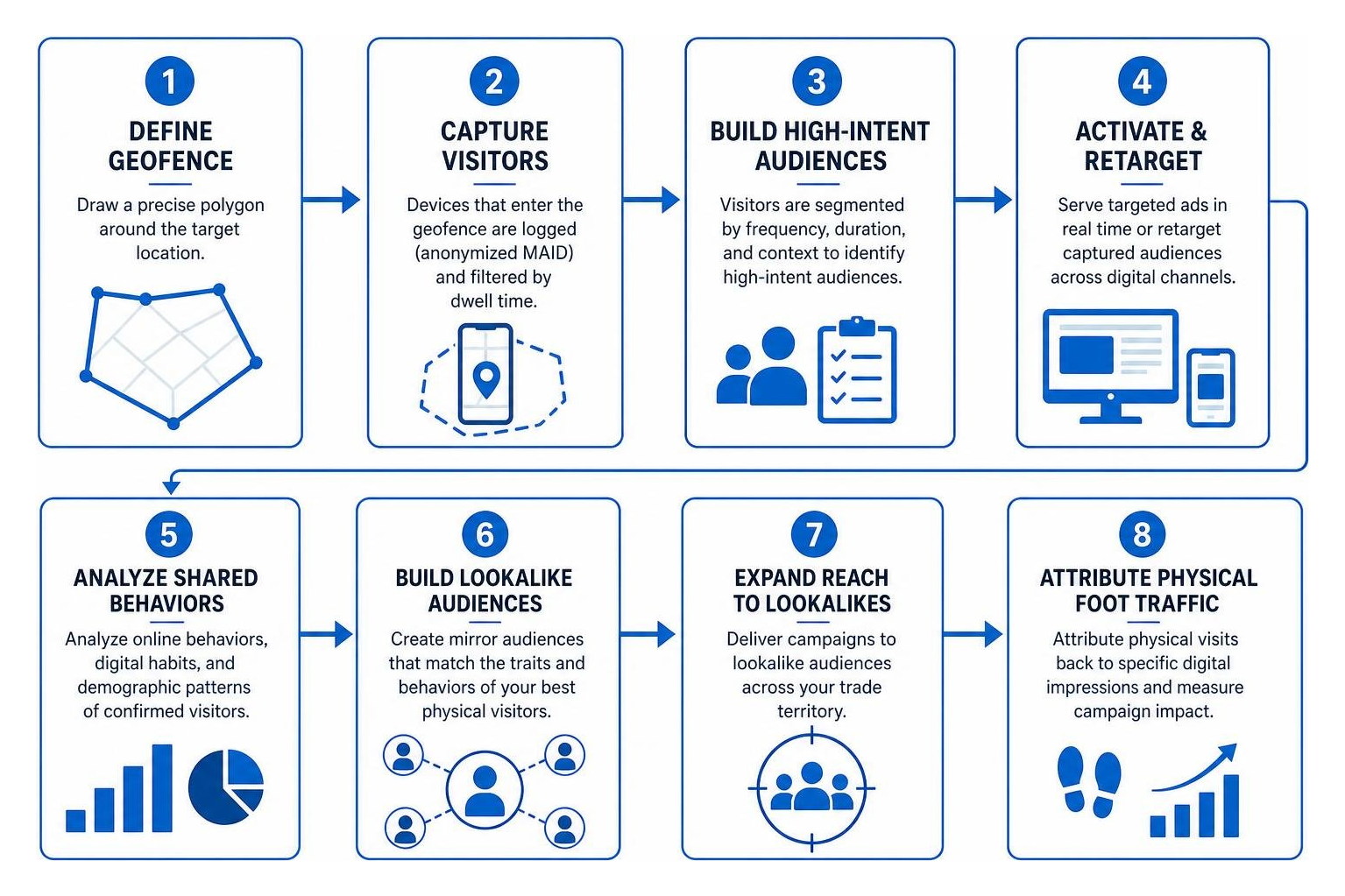
At its core, geofencing uses GPS technology, Wi-Fi triangulation, and cellular data to draw a virtual perimeter (a "geofence") around a specific physical location. When an individual carrying a smartphone enters this designated boundary with location services enabled, their anonymized Mobile Device ID (MAID) is logged. This interaction triggers programmatic ad delivery in real time or captures the device for ongoing retargeting campaigns.
Unlike basic radius targeting, modern geofencing relies on custom polygon mapping. Instead of drawing an arbitrary circle that captures adjacent highways, residential neighborhoods, and irrelevant foot traffic, custom polygons trace the exact property line or building footprint of a venue.
Understanding these technical distinctions is vital when reviewing geofencing platform capabilities to avoid wasted budget on inaccurate traffic.
| Targeting Method | Technology Used | Precision Level | Best Use Case |
|---|---|---|---|
| Geofencing (Polygon) | GPS, Cellular, Wi-Fi | Exact building footprint (1–5 meters) | Storefronts, competitor conquesting, trade show events |
| Standard Geotargeting | IP, GPS radius | Broad radius (1–10 miles) | Regional brand awareness, metro-level promotions |
| IP Targeting | Network IP address mapping | Router location (neighborhood to city) | B2B office targeting, fixed-location desktop campaigns |
Standard IP targeting often fails mobile-first campaigns because cellular carriers dynamically route IP addresses through regional data centers. A user standing in your parking lot might register an IP address three towns away. Polygon geofencing bypasses this limitation by tapping directly into native mobile positioning frameworks.
How a Geofencing Advertising Agency Builds High-Intent Audiences
Physical presence is one of the strongest offline intent signals available to marketers. When a person visits an industry trade show, an urgent care facility, or a specific retail venue, they demonstrate real-world interest that online browsing behavior alone cannot match.
When you partner with a specialized geofencing advertising agency, that physical validation becomes the foundation for advanced audience modeling:
- Audience Capture: Every device entering the defined polygon is filtered for dwell time (ensuring passersby driving at 45 MPH are excluded).
- Intent Segmentation: Devices are categorized based on frequency, duration, and context of the visit.
- Audience Mirroring (Lookalikes): By analyzing the shared online behaviors, digital habits, and demographic patterns of confirmed visitors, we build "mirror audiences" that expand your reach to matching prospects within your trade territory.
- Strategic Conquesting: By setting custom boundaries around rival businesses, brands can deploy competitor geofencing campaigns that present timely, direct alternatives to high-intent shoppers actively evaluating competitors.
Precision Targeting: Storefronts, Trade Shows, and Competitor Footprints
Where should you build your geofences? Precision location targeting allows multi-unit operators to deploy campaigns across distinct physical environments:
- Your Own Storefronts: Establish loyalty, promote seasonal offers, and drive repeat visits while consumers are on-site.
- Industry Trade Shows and Conferences: Capture professional attendees at convention centers and retarget them with B2B solutions for up to 30 days post-event.
- Competitor Footprints: Place virtual boundaries directly over competing retail, automotive, or hospitality locations to capture active shoppers.
- Complementary Hubs: Target locations where your target demographic naturally congregates (for instance, senior advocacy centers or medical complexes for healthcare providers).
Core Benefits of Partnering with a Geofencing Advertising Agency
Managing hyper-local campaigns across multiple locations introduces significant operational complexity. Each venue possesses distinct trade areas, competitor densities, and customer demographics. A dedicated agency structures these campaigns to maximize ad spend efficiency and eliminate ad waste.
For specialized sectors, such as senior care, working with an experienced senior housing marketing agency ensures that physical boundaries are chosen strategically—targeting adult children visiting medical centers, rehabilitation clinics, or estate planning offices—rather than spending money on general consumer foot traffic.
The primary benefits of a managed geofencing strategy include:
- Zero Budget Spillage: Ads only serve to users who have verified their intent via physical presence.
- Micro-Localized Messaging: Creatives dynamically swap out location names, localized offers, and regional phone numbers based on the user's nearest branch.
- Foot Traffic Lift: Clear attribution models connect ad views directly to physical walk-ins.
Multi-Location Retargeting Across Omnichannel Networks
Capturing a device inside a geofence is only step one. The real conversion power comes from multi-device, omnichannel retargeting.
Once a Mobile Advertising ID is collected within a polygon, programmatic identity graphs map that mobile device to connected home networks. This allows campaigns to retarget that prospect across multiple touchpoints:
- Mobile Display & In-App Ads: Engaging visual banners across hundreds of vetted apps.
- Connected TV (CTV) & OTT: Serving unskippable living room video ads to households whose members visited your target physical zones.
- Cross-Device Web Display: Delivering tailored desktop and tablet display ads during business hours.
Integrating these touchpoints through programmatic advertising senior living and healthcare frameworks creates a cohesive narrative that guides prospects from initial physical discovery to final inquiry.
Real-Time Analytics, Attribution, and Measuring Store Visits
Traditional digital marketing often struggles to prove whether an online ad generated an in-person visit. Geofencing solves this through Conversion Lift Metrics and Geo-Frame Attribution.

By setting up a secondary polygon over your own facility—designated as a "Conversion Zone"—the platform tracks when a device that was served an ad subsequently enters your physical location.
A seasoned performance marketing agency monitors several critical real-time metrics:
- Cost Per Visit (CPV): The exact advertising investment required to drive one confirmed physical walk-in.
- Click-Through Rate (CTR): Geofenced display ads average click-through rates around 3.5%, significantly outperforming standard programmatic banners.
- Natural vs. Campaign Lift: Comparing the foot traffic of ad-exposed devices against an unexposed control group to verify incremental foot traffic.
Evaluating and Selecting the Right Partner for Multi-Location Scale
Scaling a location-based marketing strategy across dozens or hundreds of communities requires strong technical infrastructure and transparent reporting. Many agencies resell white-labeled, black-box software that bundles ad spend into unverified markups.
When evaluating multi-location partners, look for teams offering transparent dashboards, flexible month-to-month agreements, and dedicated support. For specialized multi-community operators, tailored senior living marketing services ensure that marketing budgets adapt dynamically to fluctuating occupancy levels across individual communities.
Criteria for Vetting a Geofencing Advertising Agency for Multi-Location Scale
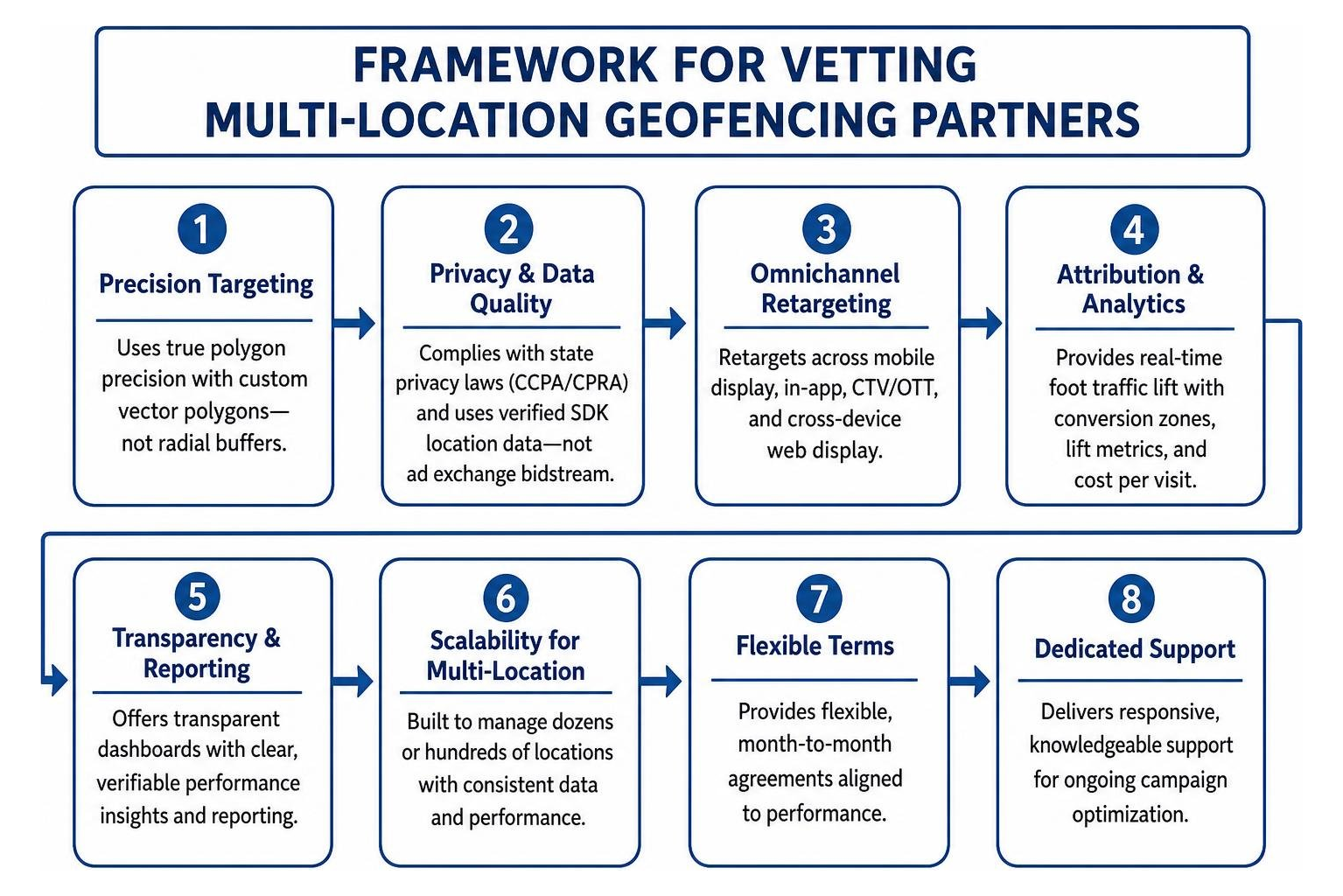
Before signing an agreement, evaluate potential agency partners using these key technical and contractual criteria:
- True Polygon Precision vs. Radial Buffers: Ensure the agency draws custom vector polygons rather than simple circles that bleed into unwanted zones.
- Privacy Compliance & SDK Data Quality: Confirm their data sources comply fully with state privacy regulations (CCPA/CPRA) and utilize verified Software Development Kit (SDK) location data rather than unreliable ad exchange bidstream data.
- Contract Flexibility: Avoid long-term contractual lock-ins. Top partners operate on performance-driven, flexible arrangements.
- Data Ownership and Direct Access: Demand direct access to live, raw reporting dashboards rather than curated monthly PDFs.

Integrating Geofencing with Search and Paid Channels
Geofencing should not live in a marketing silo. It delivers the strongest return when paired directly with high-intent search campaigns. While geofencing creates demand and captures local interest, search marketing captures users actively looking for immediate answers.
Aligning your geofencing audience with senior living pay per click infrastructure allows you to adjust search bids upward for prospects who have already visited your target geofenced locations.
Working with a specialized senior living PPC agency or a full-funnel digital marketing agency ensures that paid search, social advertising, and location intelligence work together seamlessly.
Frequently Asked Questions About Geofencing Agencies
What is the difference between geofencing and standard geotargeting?
Standard geotargeting relies on broader geographic parameters—such as an entire city, zip code, or radius around an IP address. Because IP addresses on mobile networks frequently route through distant cellular towers, standard geotargeting can suffer from wide margins of error.
Geofencing uses precise polygon mapping powered by GPS, cellular data, and Wi-Fi networks to create custom digital perimeters down to the exact property line of a building.
How do agencies measure physical foot-traffic attribution?
Agencies measure physical foot-traffic attribution by creating two distinct boundaries: a Targeting Zone (where ads are served or audience data is captured) and a Conversion Zone (your physical location).
When a mobile device that viewed your ad enters your Conversion Zone, the platform matches the device's anonymized identifier and registers a validated visit, calculating both your Cost Per Visit and overall foot-traffic lift against a control group.
What budget is required to launch a multi-location geofencing campaign?
Geofencing campaigns are traded on a programmatic CPM (cost per thousand impressions) basis. Multi-location campaigns typically require a flexible budget per location to ensure adequate impression volume and statistically valid attribution data.
Because geofencing eliminates impressions wasted on irrelevant geographies, your ad spend works more efficiently than broad programmatic campaigns, allowing brands to test, measure, and scale based on clear return on ad spend.
Conclusion
Location intelligence has redefined what multi-unit brands can achieve with their local marketing budgets. By combining custom polygon geofencing, cross-device programmatic retargeting, and foot-traffic attribution, organizations can direct their marketing investments toward audiences with verified, real-world intent.
At SJ2 Digital, we operate on an "anti-agency" model designed to give multi-location operators full transparency and maximum agility. We provide hands-on, senior-level expertise, eliminate long-term contract lock-ins, and deliver real-time, live reporting dashboards that show exactly where every dollar goes and what it achieves.
Explore how our specialized programmatic advertising senior living and multi-location growth solutions can sharpen your local targeting and drive measurable physical visits today.