
Top Instagram Advertising Agencies: Key Strengths and Fit

Choosing a partner starts with knowing where your campaign needs support. The right agency balances creative testing, audience targeting, tracking setup, and day-to-day management. According to Meta’s advertising performance data, Reels now drives the majority of incremental video conversions for direct-response campaigns.
| Agency Type | Best For | Typical Budget Level | Core Strengths | Things to Watch For |
|---|---|---|---|---|
| Senior-Living Specialists | Senior living, assisted living, memory care | Mid-to-high spend | High-intent lead generation, local radius targeting, CRM tracking | May not offer ecommerce catalog features |
| DTC & Ecommerce Specialists | Direct-to-consumer brands, retail, physical goods | Variable to high spend | In-app checkout, dynamic catalog ads, product tagging | Focus on cart purchases over phone leads |
| Creator-First / UGC Agencies | Lifestyle, beauty, consumer wellness brands | Mid-to-high spend | Fast creator sourcing, Spark Ads, organic-style video hooks | Tracking setups and server-side tracking may vary |
| Full-Funnel Growth Agencies | Multi-location services, B2C, specialized verticals | Flexible spend | End-to-end attribution, transparent dashboards, no long contracts | Requires active client feedback on lead quality |
Key Differences: Instagram Advertising vs. Facebook Ad Management
Many marketing teams manage Meta ads as a single channel. While both platforms run through Meta Ads Manager, user intent, content consumption, and conversion paths differ significantly between them.
Facebook users often browse text posts, join interest-based groups, share long articles, and use desktop browsers. In contrast, Instagram is a mobile-first, visual discovery engine where users move quickly through full-screen vertical video and imagery.
When running Facebook ad management, campaigns often rely on single-image links, detailed body copy, and desktop traffic. On Instagram, conversion paths depend on visual hooks within the first two seconds, native mobile shopping features, and creator-led storytelling.
Why Most Agencies Fail by Treating Platforms Identically
Agencies often toggle "Advantage+ Placements" without dedicated creative variations for each platform. As a result, square (1:1) desktop-focused graphics with tiny text end up on 9:16 vertical Reels. These mismatched ads look out of place, leading users to scroll past quickly, which drives up CPMs and reduces click-through rates.
As detailed in our Facebook Ads Agency Complete Guide 2026, unified campaigns often direct ad spend toward lower-cost display placements that fail to generate pipeline value. Tailoring ad creative, aspect ratios, and landing page experiences specifically to Instagram protects your budget from these automated placement drains.
Core Levers of High-Performing Instagram Campaigns
Achieving strong returns on Instagram requires shifting creative production to match current consumption patterns. Today, Reels accounts for the majority of video watch time on the platform.
Industry data shows that roughly 70% of ad accounts misallocate creative budgets to Feed over Reels. This misallocation creates significant cost inefficiencies:
- Reels CPMs average 30–50% lower than traditional Feed placements.
- Reels click-through rates (CTR) are 1.5–2.5x higher than Feed placements for identical audiences.
High-performing Reels creative relies on three core elements:
- The 1.5-Second Visual Hook: Stop the thumb immediately with rapid scene cuts, unexpected movements, or on-screen questions.
- Safe-Zone Text Overlays: Keep captions, logos, and calls to action centered to avoid being covered by the Reel interface (profile icons, captions, audio tags).
- Sound-Off Clarity: Design ads with bold captions, dynamic kinetic text, and strong visual demonstrations, since many users browse with sound muted.
Scaling with Instagram Shopping, Catalog Sales, and Shop Tab Placements
For brands selling physical products or distinct service tiers, connecting your catalog via Meta Commerce Manager removes friction from the buying journey. When agencies overlook Instagram Shopping and Catalog Sales, accounts lose an estimated 20–35% in CPM efficiency and miss out on 10–25% of potential in-app conversions.
Working alongside a dedicated Performance Marketing Agency ensures dynamic product ads (DPA) pull accurate inventory levels, real-time pricing, and targeted category collections straight into user feeds and the dedicated Shop tab.
Creator-Style Creative in Instagram Ads
Polished corporate studio ads often look like interruptions in a social feed. In contrast, creator-style user-generated content (UGC) blends naturally with native content.
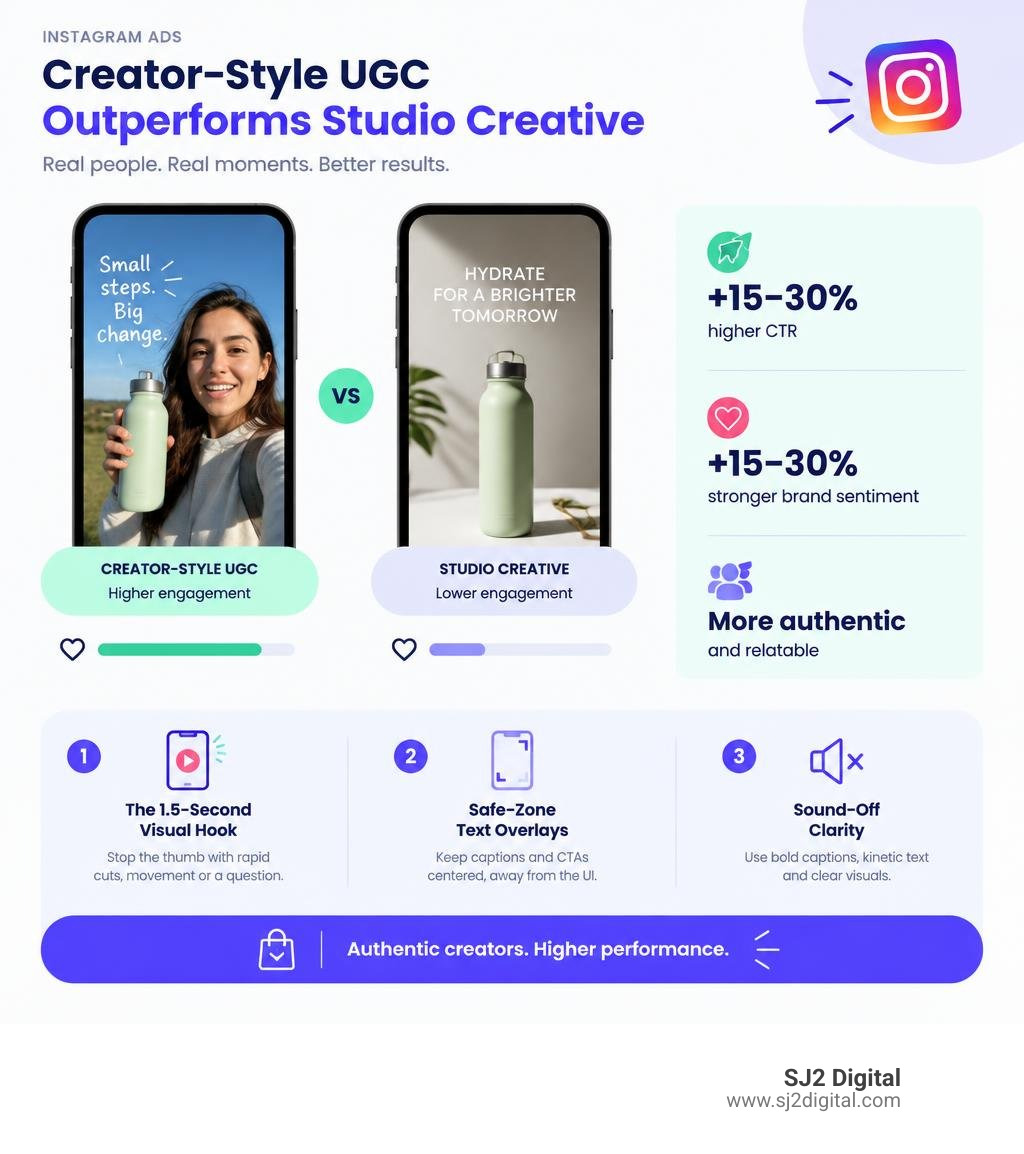
Brands that run campaigns without creator partnerships and authentic UGC regularly experience a 15–30% drop in CTR and overall brand sentiment. Partnering with a specialized Customer Acquisition Agency allows you to secure creator usage rights and run Branded Content Ads (or Spark-style partnership posts) directly from a creator’s handle to build third-party credibility.
Technical Campaign Architecture and Policy Compliance
Behind engaging creative lies the technical setup that powers conversion tracking and keeps your ad account compliant.

Modern campaign structures rely on three technical components:
- Meta Conversions API (CAPI): Server-side tracking that bypasses browser-level ad blockers and cookie restrictions, sending accurate conversion data back to Ads Manager.
- Advantage+ Shopping & Lead Campaigns: Automated targeting structures that leverage Meta’s machine learning while maintaining creative guardrails.
- Multi-Touch Attribution Integration: Independent attribution reporting (such as live client dashboards) to verify platform ROAS against verified CRM pipeline revenue.
Using an experienced team for Outsourced PPC Management also helps protect your brand against compliance flags and account suspensions.
Instagram Ad Formats and Placements Compared
| Ad Format | Best Placement | Primary Objective | Average Conversion Lift | Key Requirement |
|---|---|---|---|---|
| Reels Video Ad | Reels Stream | Top/Middle Funnel Lead Gen & Sales | High (1.5–2.5x CTR) | 9:16 vertical format; fast visual hook |
| Interactive Story Ads | Instagram Stories | Mid-Funnel Consideration | Moderate to High | Engagement stickers; swipe-up action |
| Shopping Catalog Carousels | Feed & Shop Tab | Bottom-Funnel Direct Purchases | High for Ecommerce | Synced Commerce Manager feed |
| Static Carousel Units | Explore & Feed | Education, Service Walkthroughs | Consistent Baseline | High-contrast visual cards |
Key Criteria for Selecting a Top Instagram Advertising Agency

When evaluating partners, look for teams that build tailored strategies rather than relying on generic Meta templates. Top-performing agencies typically deliver a 50–100% ROAS lift over six months by fixing creative allocation, deploying CAPI, and refining account architecture. In comparison, generalist agencies often see modest 10–20% improvements because they leave platform-specific tools unused.
Evaluating options through a reliable Digital Marketing Agency framework helps confirm whether a prospective partner has the operational bandwidth to test new creative angles weekly.
Why Work with a Specialized Instagram Advertising Agency vs. Generic Meta Teams
Generic Meta media teams often treat Instagram as an afterthought, repurposing horizontal video ads and desktop image assets. On the other hand, organic influencer shops can source creators, but they often lack the technical background to set up custom conversion APIs, run Advantage+ campaigns, or scale direct-response ad spend.
Working with an experienced instagram advertising agency bridges this gap. It combines technical media buying with native, high-converting creative testing, ensuring every dollar spent works toward measurable pipeline value.
What a Full-Funnel Instagram Advertising Agency Audit Includes
Before signing a contract or adjusting your ad spend, request an audit to identify existing performance bottlenecks.
A thorough audit should evaluate:
- Creative Placement Split: Auditing the exact spend ratio across Reels, Stories, Feed, and Explore.
- Product Feed & Commerce Health: Reviewing catalog sync accuracy, out-of-stock exclusions, and product tag performance.
- Tracking Integrity: Checking for dual-firing pixel tags, verifying CAPI event match quality, and matching data with your CRM.
- Audience Saturation & Frequency: Identifying audience overlap and creative fatigue that inflate CPMs.
- Budget Leakage: Pinpointing automated placements that drain spend on low-converting inventory.
Frequently Asked Questions About Instagram Advertising
How much budget should brands allocate to Instagram Reels vs. Feed?
Most brands should allocate at least 60% of their creative spend to 9:16 Reels video, roughly 25% to Stories, and retain no more than 15% for traditional Feed placements. Because Reels CPMs are 30–50% cheaper while driving higher CTRs, prioritizing vertical video lowers acquisition costs across the board.
What is the expected timeline for measurable ROAS improvements?
A structured optimization timeline follows four clear stages:
- Days 1–30: Account audit, CAPI server-side tracking setup, and baseline creative testing.
- Days 30–60: Reels-first creative rollouts, typically improving initial ROAS metrics.
- Days 60–90: Catalog sales optimization, in-app Shop onboarding, and dynamic ad retargeting.
- Days 90–180: Scaling whitelisted creator partnerships, resulting in compounded multi-quarter efficiency gains.
What are the biggest compliance risks for Instagram advertisers?
The three primary compliance risks are:
- FTC Disclosure Violations: Failing to use the native "Paid Partnership with" tool on influencer assets.
- Commercial Audio Infringement: Using unlicensed popular audio tracks in business ads, which can trigger ad removal or account flags.
- Vertical-Specific Restrictions: Non-compliance with strict Meta advertising policies for regulated industries like financial services, housing, or healthcare.
Maximize Your Instagram Paid Growth
Reaching sustainable paid social performance requires specialized creative, proper server-side tracking, and continuous campaign optimization. Treating Instagram simply as a duplicate of Facebook leaves significant performance gains on the table.
At SJ2 Digital, we operate on an anti-agency model:
- No Long-Term Contracts: We earn your business every month based on campaign performance.
- Transparent Live Dashboards: Track your metrics, cost per qualified lead, and pipeline conversion data in real time.
- Senior-Level Specialists: Work directly with senior performance marketers who manage your strategy hands-on within your budget.
Whether you operate multi-location healthcare communities or consumer service brands, our tailored approach to senior living social marketing and paid social media turns ad spend into measurable revenue. Reach out to our team today for a transparent review of your Instagram ad account.