
How to Generate Qualified Memory Care Inquiries

To improve memory care lead generation, start with families who need the care you provide. Build referral relationships with discharge planners and clinicians, and target local searches for dementia care. Ask each family about care needs, location, budget, and timing. Then respond quickly, offer a helpful next step, and track which inquiries become tours and move-ins.
A full inbox is not the goal. Families may be facing a hospital discharge, a safety concern, or months of uncertainty. Clear answers and a calm, useful response build trust. For operators, the measure that matters is qualified move-ins, not lead volume.
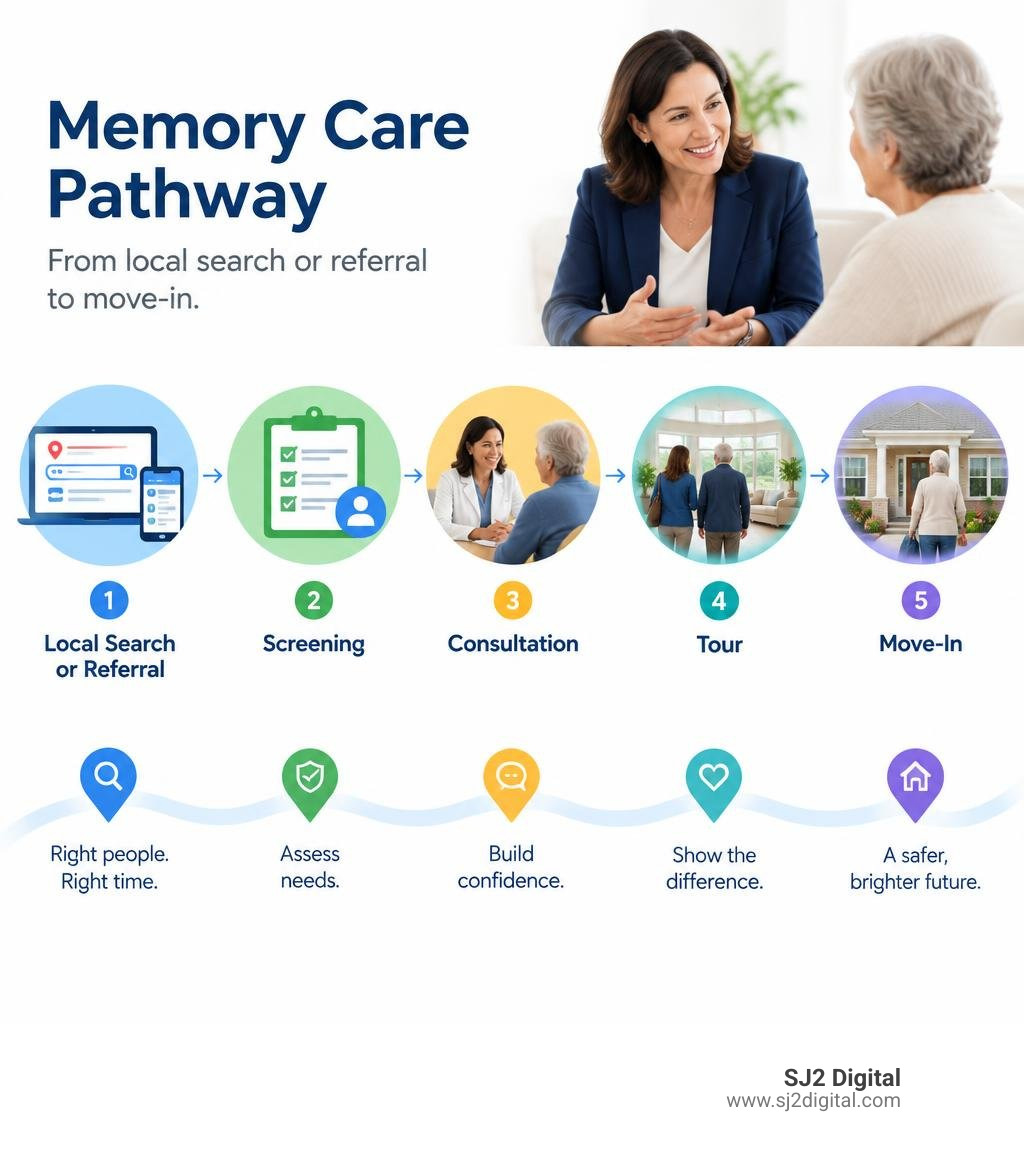
Industry data shows that senior housing occupancy has stabilized around 88% to 89%, while annual supply growth remains under 1% in most major markets, according to NIC MAP Vision. Memory care communities continue to absorb units, but winning those placements requires a specialized approach. Whether an adult child is navigating late-night online searches or a hospital social worker is seeking immediate placement, your pipeline must balance clinical authority with genuine empathy.
Why Memory Care Lead Generation Differs from Assisted Living
Treating memory care inquiries like standard assisted living leads is one of the most common operational mistakes in senior living. Assisted living decisions are often driven by lifestyle desires, social opportunities, and light assistance with daily activities. In contrast, memory care inquiries stem from cognitive decline, progressive memory loss, and severe family stress.
To build an effective pipeline, operators need specialized senior living marketing services that recognize the practical and emotional differences between these care levels.
| Strategy Attribute | Assisted Living Marketing | Memory Care Lead Generation |
|---|---|---|
| Primary Decision Trigger | Lifestyle upgrade, minor physical decline, social isolation | Acute safety crisis, cognitive decline, caregiver exhaustion |
| Primary Decision-Maker | The senior adult alongside their adult children | Adult children, medical proxies, or legal guardians |
| Core Messaging Focus | Amenities, dining, active lifestyle, social calendar | Safety protocols, specialized dementia programming, clinical staff |
| Decision Window | 30 to 90 days (deliberate and lifestyle-driven) | 60 to 120 days (educational) OR 48 to 72 hours (crisis) |
| Top Acquisition Channel | Broad digital consumer advertising, local tours | Professional B2B medical referrals, high-intent localized search |
| Key Conversion Metric | Cost per inquiry and tour volume | Cost per qualified move-in and census stabilization |
The Crisis-Driven Trigger and Caregiver Emotional Journey
Families rarely search for memory care proactively. The inquiry is almost always sparked by a critical turning point: a parent wandering from home, a severe medication error, an acute hospitalization, or a caregiver reaching emotional and physical exhaustion.
These families are experiencing intense guilt, fear, and grief. Aggressive sales pitches and generic marketing brochures fall flat. Effective outreach meets caregivers with calm reassurance, clear guidance, and practical educational resources.
Clinical Authority vs. Hospitality-Led Positioning
Assisted living marketing often highlights pickleball courts, restaurant-style menus, and vibrant community outings. For memory care, families look for safety, security, and proven cognitive care.
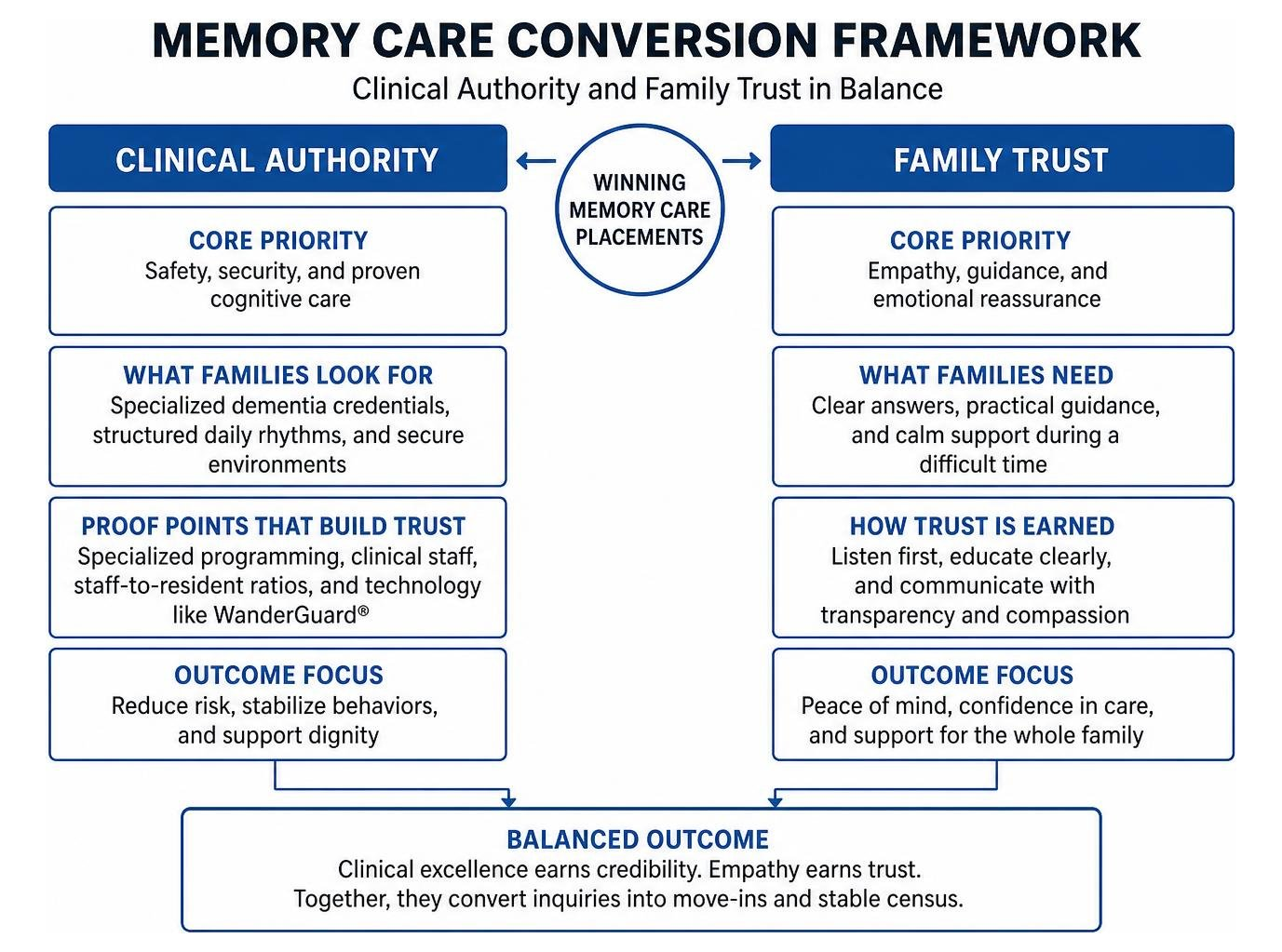
Your messaging should emphasize specialized dementia credentials, structured daily rhythms, secure environments (such as WanderGuard® technology), and staff-to-resident ratios. Adapting tailored digital marketing for senior living around clinical expertise establishes immediate trust with overwhelmed families.
High-Converting Acquisition Channels for Memory Care Operators
Achieving consistent census growth requires diversifying inquiry channels. A balanced memory care marketing strategy blends professional medical referrals with targeted digital campaigns to capture both urgent and emerging needs.
High-Intent Search: Optimizing PPC Campaigns for Memory Care Lead Generation
When a safety incident occurs, adult children turn to search engines for immediate answers. Capturing these high-intent searches requires targeted paid search strategies.
- Target High-Intent Keywords: Focus on specific phrases like "Alzheimer's care facilities near me" or "secure memory care community" rather than broad terms like "senior homes".
- Add Negative Keywords: Filter out unqualified traffic by excluding terms like "cheap", "free", "independent living", and "caregiver jobs".
- Use Geo-Fencing: Focus ad spend within a 10- to 15-mile radius of your community, where family members are most likely to visit.
Collaborating with a dedicated senior living PPC agency ensures paid campaigns target families actively seeking memory support. For more hands-on strategies, explore our full guide to senior living pay per click management.
Professional Referral Networks: Neurologists, Hospitals, and Discharge Planners
Professional medical referrals represent 40% to 60% of the highest-converting move-ins for well-managed communities. These leads convert at 35% to 55%, with an average cost per move-in ranging from $2,000 to $4,500.
Building reliable referral networks involves regular outreach to:
- Hospital discharge planners and medical social workers
- Geriatricians and outpatient neurologists
- Memory assessment centers and local elder law attorneys
Keep these professionals updated on your clinical capabilities, current bed availability, and specialty programming so your community stays top-of-mind during hospital discharges.
Programmatic and Targeted Social for Family Caregivers
While broad consumer advertising on social platforms produces lower move-in conversion rates (8% to 18%), targeted social campaigns are an effective way to support early-stage caregivers.
Using programmatic advertising for senior living alongside senior living social marketing allows operators to reach adult children aged 45 to 64 who are researching dementia symptoms. Offering helpful downloads—such as a "Dementia Caregiver Safety Checklist"—builds early brand affinity before a crisis occurs.
Qualification Protocols: Filtering Inquiries by Urgency, Care Needs, and Geography
Unqualified inquiries take time away from families who need immediate help. Implementing clear qualification steps helps intake teams focus on genuine placement opportunities.
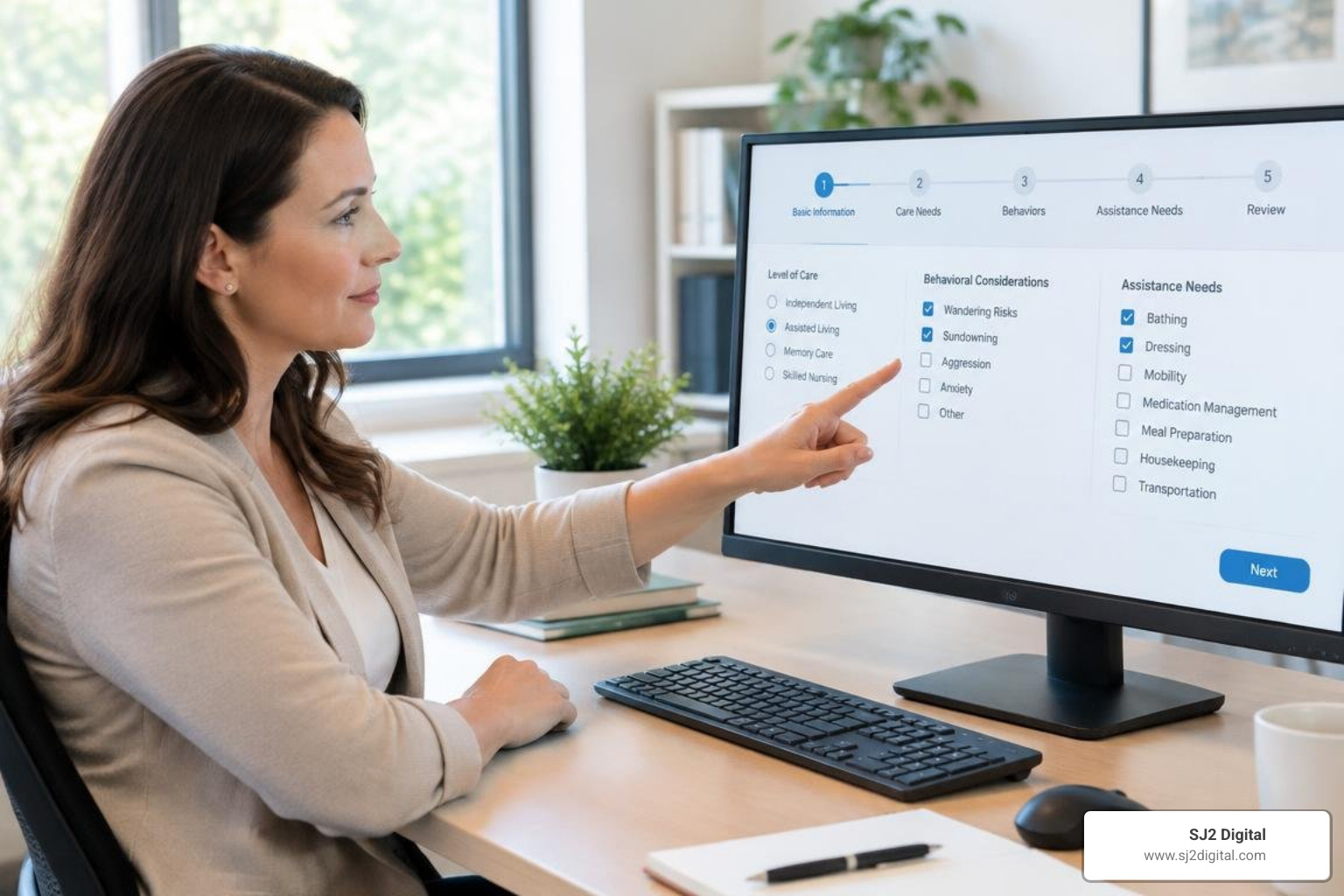
Multi-Step Pre-Qualification Forms and Real-Time Scoring
Long, generic forms can turn away stressed caregivers, while overly simple forms often bring in unqualified leads. Multi-step intake forms strike the right balance by gathering essential details step by step:
- Care Level & Behaviors: (e.g., wandering risks, sundowning, assistance with daily activities)
- Move-In Timeline: Immediate (under 7 days), 30 days, or exploring options
- Geographic Location: Target zip codes within your primary service area
- Primary Contact: Confirming the direct family decision-maker
Combining these intake workflows with organic senior living SEO ensures that the organic traffic coming to your site matches your specific care offerings.
Lead Screening for Cognitive Care Requirements and Financial Readiness
To protect your team's time and ensure your community can support the resident's needs, screen for two core factors early:
- Clinical Alignment: Review whether the individual requires specialized memory support or standard assisted living, ensuring your clinical team is equipped for their care level.
- Financial Preparedness: Provide clear private-pay rate ranges upfront to avoid surprises for both the family and your intake team.
Designing a 90-Day Lead Nurturing and Tour Conversion Workflow
Outside of acute hospital discharges, the typical memory care decision cycle spans 60 to 120 days. Families need time to process their emotions, consult loved ones, and tour options. Consistent, thoughtful nurturing helps keep your community top of mind throughout this journey.
Multi-Touch Nurturing Architecture for the 60-to-120-Day Decision Cycle
A structured nurturing campaign should deliver 10 to 15 educational touchpoints over a 90-day window, moving families from initial research to scheduling a tour.
Using strategic marketing automation for lead generation, an updated CRM marketing automation guide, and personalized email marketing automation helps deliver helpful resources without overwhelming your sales team.
Automating Response Times and Speed-to-Lead Workflows
When an urgent inquiry comes in, every minute counts. Research shows that responding within five minutes significantly increases the likelihood of booking a tour.
- Instant Routing: Automatically send incoming inquiries directly to the on-duty sales counselor or intake coordinator.
- Automated Text Confirmation: Send an immediate text to the family confirming their inquiry and offering a direct scheduling link.
- Immediate Team Alerts: Keep intake notification delays under five seconds to ensure your team can respond while the family is actively looking for help.
Ethical Compliance, Tracking, and Census Growth Metrics
Marketing memory care services requires a strong commitment to data privacy, ethical communication, and transparent performance tracking.
Regulatory Standards: HIPAA, TCPA, and Data Privacy in Memory Care Lead Generation
Protecting family and resident data is critical for any healthcare-adjacent community.
- HIPAA Compliance: Protect all personal health information collected on digital forms using secure encryption and compliant storage.
- TCPA Consent: Include clear opt-in checkboxes on all forms before sending automated text messages or marketing phone calls.
- CCPA & Data Privacy: Provide clear privacy policies, explain how family data is stored, and offer straightforward opt-out options.
Census-First Reporting: Tracking Cost Per Move-In and Occupancy Lift
Measuring clicks, impressions, and raw form submissions only tells part of the story. Successful communities evaluate their marketing by actual census growth.
Key performance indicators to track in your dashboard include:
- Inquiry-to-Tour Rate: (Target: 30% to 50%)
- Tour-to-Move-In Rate: (Target: 25% to 40%)
- Cost Per Move-In (CPMI): (Target: $2,000 to $4,500 across all channels)
- Portfolio Occupancy Lift: Aiming for sustained community occupancy above 90%
Tracking performance through a live senior living data dashboard gives you full visibility into which channels generate move-ins. Working with an experienced senior housing marketing agency, an agile performance marketing agency, or an experienced customer acquisition agency ensures every marketing dollar directly supports your census goals.
Frequently Asked Questions About Memory Care Lead Generation
What makes memory care lead generation different from assisted living marketing?
Memory care inquiries are largely driven by health crises and caregiver burnout rather than lifestyle preferences. They require clinical messaging, longer nurturing workflows (60 to 120 days), and strong professional referral relationships with discharge planners and neurologists.
What is the most cost-effective channel for memory care move-ins?
Professional medical referrals deliver the highest return on investment, converting at 35% to 55%. For paid digital channels, localized search campaigns targeting specific dementia terms yield high intent at an average cost per qualified lead of $60 to $140.
How quickly should intake teams respond to new memory care inquiries?
Intake teams should aim to respond within five minutes. Families seeking memory care are often dealing with urgent situations, and reaching out quickly establishes your community as a dependable source of support.
Conclusion
Building a successful memory care pipeline is about creating clear, ethical systems that connect with families when they need support most. By combining professional referral networks, high-intent local search campaigns, and helpful automated nurturing, operators can build steady census growth while giving families the guidance they need.
At SJ2 Digital, we operate on an anti-agency model—meaning no long-term contracts, senior-level hands-on execution, and transparent dashboards that track real move-ins rather than vanity metrics.
If you are ready to stabilize your community's occupancy, explore our specialized senior living pay-per-click management services to build a predictable, high-converting inquiry pipeline.