
How Digital Marketing for Lead Generation Turns Interest Into Qualified Leads
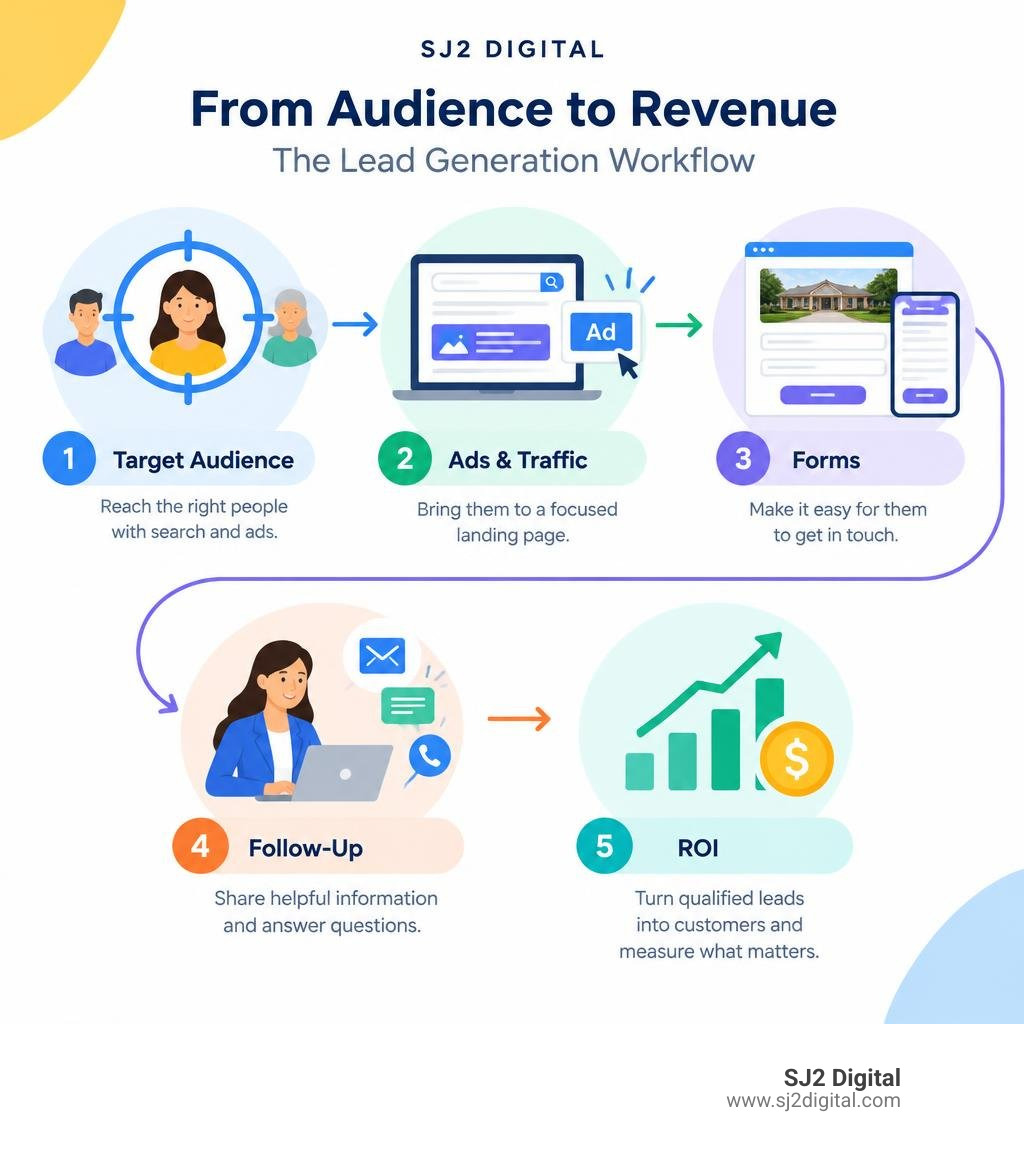
To use digital marketing for lead generation, reach people who are looking for what you offer through search and ads. Send them to a page with a clear next step and a short form. Then check which inquiries are a good fit, follow up with useful information, and measure how many become customers.
For a senior-living operator, a useful lead might be a family asking about care options or booking a tour. The goal is not just more names on a list. It is more qualified conversations, with a clear view of what each lead costs and which efforts bring results.
What Is Digital Marketing for Lead Generation?
Lead generation is the structured process of identifying, attracting, and converting target prospects into individuals who have actively signaled interest in your services. In the modern landscape, lead generation is not about buying cold email lists or interrupting strangers with unsolicited sales calls. Online-savvy prospects are wary of blatant pitches; aggressive cold outreach often damages brand trust before a relationship can begin.
Instead, modern lead generation focuses on inbound demand capture and targeted digital touchpoints. We build clear conversion pathways using valuable content, dedicated landing pages, and distinct value propositions. By pairing your promotional efforts with proven strategies for digital marketing for customer acquisition, you ensure that every dollar spent directly feeds your sales pipeline with interested buyers.
Categorizing Inbound Prospects: IQL, MQL, and SQL
Not all leads are created equal. Prospects enter your ecosystem at different stages of intent, requiring distinct communication styles to move them closer to a purchase decision:
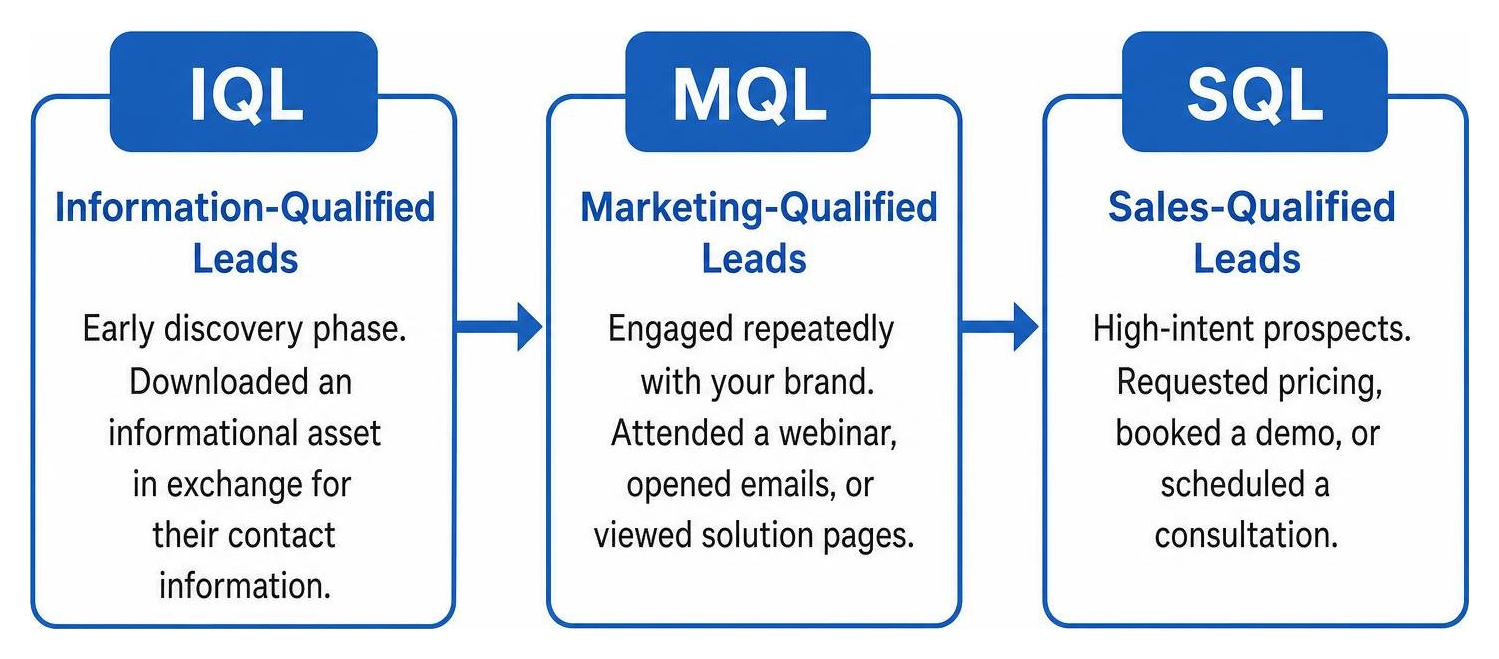
- Information-Qualified Leads (IQL): These individuals are in the early discovery phase. They have identified a problem and downloaded an informational asset—such as a research report, beginner's guide, or checklist—in exchange for their contact information.
- Marketing-Qualified Leads (MQL): These prospects have engaged repeatedly with your brand. They might attend a webinar, open multiple email newsletters, or view specific solution pages, signaling that they fit your ideal customer profile and want deeper insights.
- Sales-Qualified Leads (SQL): These are high-intent prospects who have taken direct action to speak with your team, such as requesting a pricing breakdown, booking a product demonstration, or scheduling an on-site consultation.
B2B vs. B2C Sales Cycles and Lead Dynamics
The dynamics of lead generation shift significantly depending on whether your organization sells to businesses or direct consumers. Understanding these structural differences helps you allocate your budget and develop messaging that resonates with your core audience.
| Factor | B2B Lead Generation | B2C Lead Generation |
|---|---|---|
| Sales Cycle Length | Ranges from 2 to 12+ months | Often minutes, days, or a few weeks |
| Decision-Making Process | Multi-stakeholder committees, rational ROI-driven | Individual or household, emotionally driven |
| Key Touchpoints | White papers, case studies, webinars, LinkedIn | Social ads, search listings, quick promo offers |
| Average Deal Value | High contract values, multi-year agreements | Moderate to low transaction values (exceptions exist) |
| Primary Conversion Goal | Booked sales consultation or demo | Direct online purchase, consultation, or tour |
For instance, consumer-facing operations like senior care communities blend emotional buying triggers with high-consideration family decisions. For a deeper breakdown of multi-channel strategies across business models, explore 10 Effective Digital Marketing Channels & How to Use Them.
Most Effective Channels in Digital Marketing for Lead Generation
Relying on a single marketing channel leaves your business vulnerable to algorithm shifts and rising ad costs. A sustainable pipeline requires multi-channel diversification managed by an agile performance marketing agency that tracks multi-touch attribution and prioritizes high-intent audiences.
Search Engine Optimization (SEO) and Generative Engine Optimization (GEO)
Organic search captures prospects at the precise moment they seek answers. A strong SEO strategy pairs high-intent keyword mapping with educational content that addresses specific pain points. For example, Semrush attracts over 35 million visitors each month through organic digital marketing channels, with single educational blog posts generating over 11,000 monthly visits.
In addition to traditional search algorithms, Generative Engine Optimization (GEO) ensures your brand is referenced and cited inside AI-generated overviews. If you manage a community or healthcare organization, specialized senior living SEO ensures local families find your community ahead of generic aggregator directories.
High-Intent Paid Search and PPC Advertising
Pay-per-click (PPC) advertising places your brand at the very top of search engine results for transactional queries. Because prospects clicking search ads are actively looking for immediate solutions, PPC leads often exhibit the highest conversion rates.
To maximize your return on ad spend, partner with a dedicated PPC lead generation agency that continuously refines negative keyword lists, deploys call assets, and optimizes ad extensions. For organizations lacking in-house bandwidth, leveraging outsourced PPC management ensures senior experts actively manage your cost per acquisition.
Paid Social Media and B2B Targeting
Paid social platforms excel at creating demand by reaching specific demographic and professional segments. In the B2B sector, running LinkedIn B2B advertising allows you to target decision-makers by exact job title, company size, and industry vertical.
For broader consumer audiences, strategic Facebook ad management lets you capture contact details directly within the feed through native lead generation forms, reducing friction and driving higher completion rates.
Programmatic and Location-Based Advertising
Programmatic advertising expands your reach across thousands of premium digital networks, using real-time behavioral data to display targeted messages to in-market buyers.
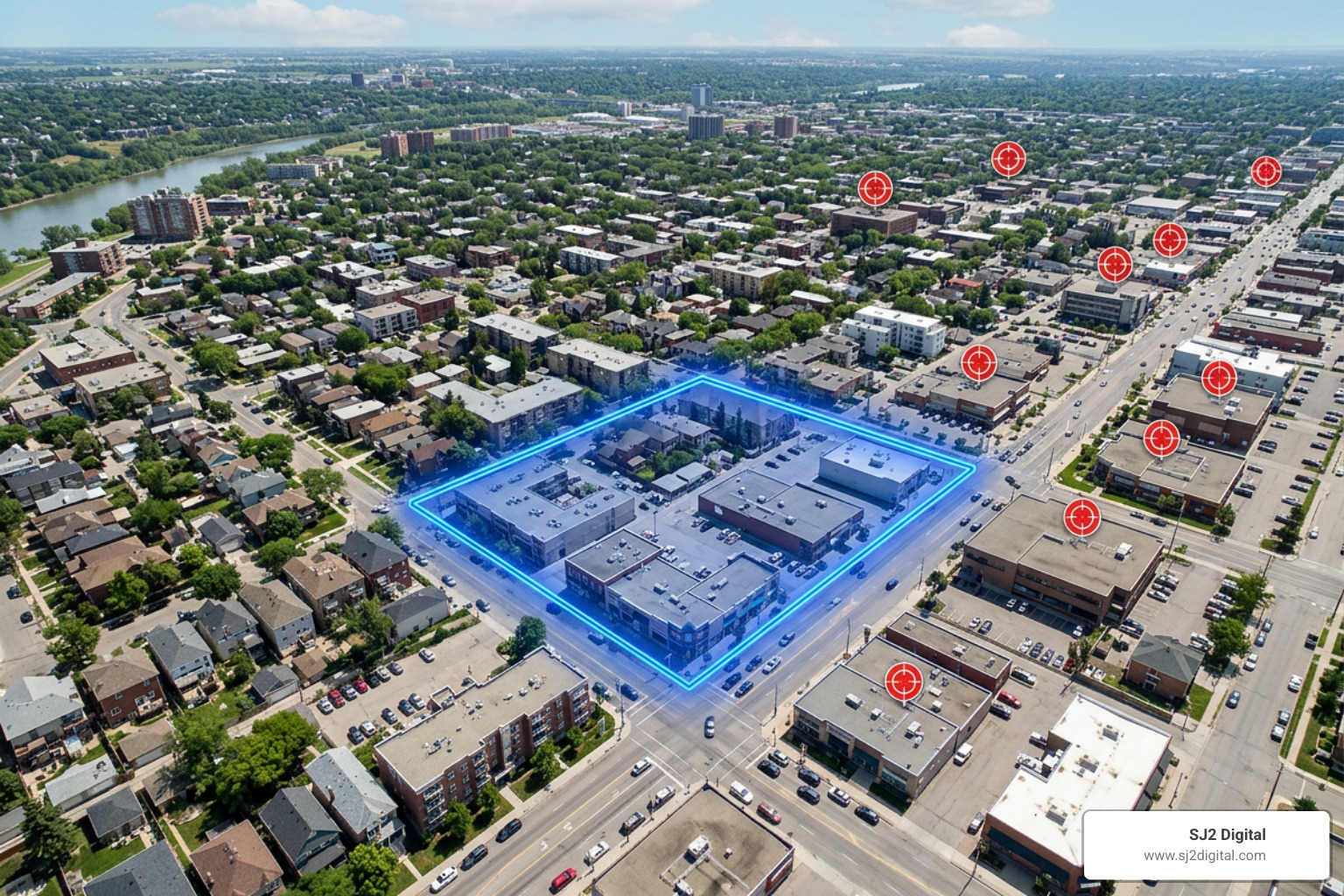
Using programmatic digital advertising, you can build precise audience parameters around physical locations. With competitor geofencing, you can serve ads to prospects who have recently visited physical competitor sites or industry conferences, capturing active shoppers who are evaluating alternatives.
Lead Qualification and Nurturing Frameworks
Generating traffic is only half the battle. Once an inquiry arrives, you need systematic frameworks to grade lead quality and nurture prospects through the funnel using integrated marketing automation for lead generation.
Implementing BANT and Behavioral Lead Scoring
Lead scoring assigns numerical values to prospects based on explicit demographic data and implicit behavioral triggers. Combining demographic fit with behavioral signals prevents your sales team from wasting time on cold leads.
A structured B2B lead nurturing strategy often incorporates the classic BANT qualification framework:
- Budget: Does the prospect have the financial resources required for your solution?
- Authority: Is the contact a key decision-maker or an influencer within the buying committee?
- Need: Does your product or service solve an immediate, well-defined operational pain point?
- Timing: What is the prospect's planned timeline for implementation?
Behavioral scoring awards additional points when prospects download technical white papers, visit pricing pages, or view case studies, while applying point decay to records that remain inactive over extended periods.
Automated Email Sequences and Drip Campaigns
Once a lead enters your database, automated email workflows deliver timely, educational content tailored to their specific interests. Implementing email marketing automation ensures immediate follow-up when lead intent is highest.
These sequences nurture early-stage IQLs and MQLs over time, keeping your brand top-of-mind until they are ready to engage with sales.
Best Practices and Modern Trends in Digital Marketing for Lead Generation
Online consumer expectations require marketing campaigns to be fast, mobile-friendly, and hyper-relevant. Friction on landing pages—such as overly complex forms or slow load times—drastically lowers conversion performance.

Key best practices include:
- Minimizing Form Fields: Ask only for necessary information upfront. Every additional form field lowers conversion rates.
- Continuous A/B Testing: Regularly test headline variations, CTA button text, hero imagery, and layout elements to find what resonates best.
- Visible Social Proof: Place client testimonials, industry certifications, and ratings near conversion buttons to build instant trust.
Artificial Intelligence and Predictive Personalization
Modern platforms use artificial intelligence to analyze user signals and deliver dynamic experiences. By reviewing our CRM marketing automation guide 2026, teams can discover how AI-driven predictive lead scoring anticipates which prospects are most likely to close. Dynamic landing pages can adapt their headlines and content blocks in real time based on the visitor's industry or previous browsing behavior.
Interactive Content, Video, and Trust-Building Assets
Interactive content consistently outperforms static PDF downloads. Tools such as ROI calculators, assessment quizzes, and self-guided product tours provide immediate, personalized value while collecting qualification data.
Pairing interactive tools with short-form video explainers and authentic client case studies humanizes your brand, establishing the credibility required to turn passive visitors into active inquiries.
Key Metrics to Measure Lead Generation Success
Tracking campaign metrics across every touchpoint ensures your marketing budget is deployed efficiently. Rather than settling for delayed monthly reports, forward-thinking brands use real-time analytics like our senior living data dashboard to monitor live performance and adjust campaigns on the fly.
Essential KPIs: CPL, Conversion Rates, and MQL-to-SQL Velocity
To evaluate your acquisition engine, track these key metrics:
- Cost Per Lead (CPL): Total marketing spend divided by the total number of leads captured.
- Landing Page Conversion Rate: The percentage of landing page visitors who complete the lead form.
- MQL-to-SQL Conversion Rate: The ratio of marketing leads that successfully pass sales qualification criteria.
- Pipeline Velocity: How quickly a newly captured lead progresses from initial contact to a closed sale.
- Customer Acquisition Cost (CAC): Total sales and marketing investment required to secure one paying customer.
Multi-Channel Attribution and ROI Modeling
Because modern buyers interact with multiple channels before converting, relying strictly on first-touch or last-touch attribution gives an incomplete view of campaign performance.
Multi-touch attribution models allocate appropriate revenue credit across paid search, social ads, organic search, and email nurturing. This provides a clear, data-backed view of customer lifetime value (LTV) relative to initial acquisition spend.
Frequently Asked Questions About Lead Generation
What is the most cost-effective digital marketing channel for lead generation?
Organic search (SEO) and content marketing offer the highest long-term return on investment because high-ranking assets continue to generate inbound leads long after their initial creation. Referral marketing is another exceptionally cost-effective channel; for instance, PayPal achieved 7% to 10% daily organic growth by incentivizing existing users to invite friends.
How do you calculate Cost Per Lead (CPL)?
Cost Per Lead is calculated by dividing your total campaign expenses by the number of leads generated during that same period. For example, if a paid marketing campaign costs $1,000 and generates 200 leads, your cost per lead is $5.
How has AI changed lead generation strategies in 2026?
AI has shifted lead generation from manual list-building and generic messaging to predictive qualification and automated personalization. Algorithms now score prospect intent based on behavioral micro-signals, dynamically tailor website copy to individual visitors, and streamline follow-up workflows via intelligent automation.
Conclusion
Building a predictable, scalable lead generation engine requires combining targeted traffic, high-converting landing pages, structured qualification frameworks, and continuous data analysis.
At SJ2 Digital, we operate on an "anti-agency" model: no long-term contracts, completely transparent live dashboards, and direct access to senior-level growth experts who manage your budget as if it were their own. Whether you need full-funnel paid search management or specialized senior living marketing services, our team builds custom acquisition campaigns engineered to maximize your return on investment. Contact us today to transform your inbound pipeline.